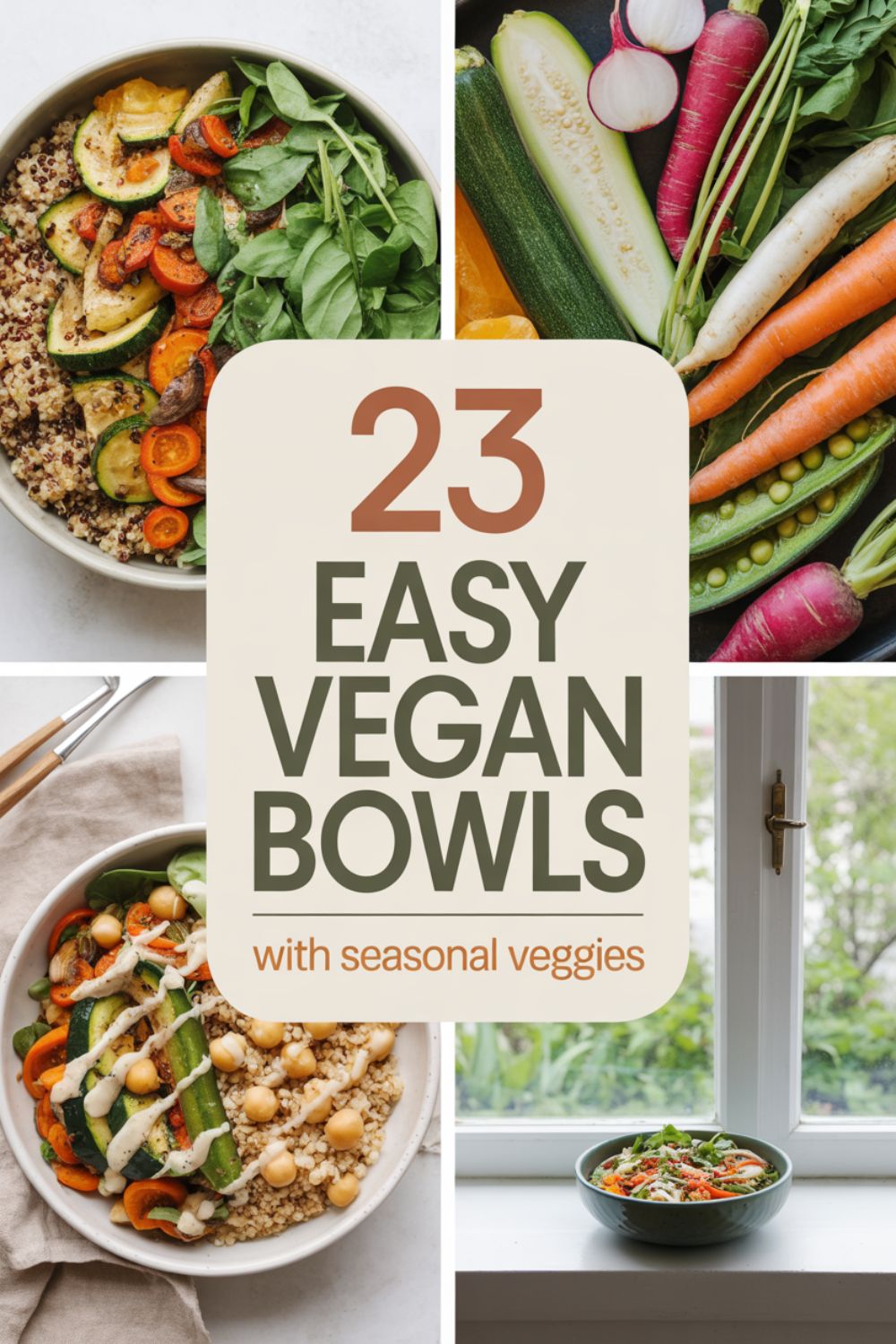
23 Easy Vegan Bowls with Seasonal Veggies
Look, I get it. You open the fridge at 6 PM on a Tuesday, stare at that random assortment of vegetables you bought with the best intentions, and wonder what the heck you’re supposed to do with a butternut squash, three carrots, and half a bunch of kale. Been there, done that, own the T-shirt.
Here’s what I’ve learned after years of winging it in the kitchen: vegan bowls are your secret weapon. They’re forgiving, they’re flexible, and they make you look like you actually have your life together. You don’t need fancy ingredients or a culinary degree. You just need whatever’s in season, a grain or two, and the willingness to throw things in a bowl and call it dinner.
I’m talking about 23 bowls that change with the seasons because, honestly, eating tomatoes in January just feels wrong. These recipes work with what nature’s actually producing right now, which means better flavor, more nutrients, and—bonus—they won’t cost you an arm and a leg at the grocery store.
Why Seasonal Veggies Actually Matter (And I’m Not Just Being Preachy)
I used to roll my eyes at the whole “eat seasonally” thing. Sounded like something people say to feel superior at farmer’s markets. Then I actually tried it, and wow, was I wrong.
Seasonal vegetables are legitimately better. They taste better because they ripened naturally instead of in a truck somewhere between California and wherever you live. They’re cheaper because farmers have tons of them and aren’t paying for international shipping. And here’s the kicker—seasonally harvested produce typically has significantly higher nutrient content than their imported counterparts that spent weeks getting to your plate.
Spring gives you asparagus and peas. Summer dumps tomatoes and zucchini on you like it’s going out of style. Fall brings squash and Brussels sprouts. Winter? Root vegetables for days. When you work with what’s actually in season, cooking becomes easier because the ingredients are doing half the work for you.
The Anatomy of a Perfect Vegan Bowl
Every great bowl follows the same basic formula, and once you get it, you can improvise forever. Think of it like a template you customize based on what’s in your kitchen.
Start with Your Base
You need something substantial at the bottom. I usually go with quinoa, brown rice, or farro because they’re filling and don’t require much brain power. Cook a big batch on Sunday, and you’ve got bases for the entire week. Sometimes I use spiralized sweet potato or cauliflower rice if I’m feeling fancy or trying to cut carbs.
The base is where you get your complex carbohydrates and fiber that keeps your digestive system happy. Don’t skip this part unless you want to be hungry again in an hour.
Pile on the Seasonal Vegetables
This is where the magic happens. Use at least three different vegetables, and try to get different colors on your plate. Not because it looks pretty for Instagram (though it does), but because different colored vegetables provide different nutrients your body actually needs.
Roast them, steam them, eat them raw—whatever. I’m partial to roasting because you can do a whole sheet pan at once while you’re making other stuff. Toss them with a bit of olive oil and salt, crank the oven to 425°F, and forget about them for 25 minutes.
For a complete guide to building these bowls consistently, check out these vegan meal prep strategies that actually work for busy weeks.
Add Your Protein
Here’s where people get weird about vegan food. “But where do you get your protein?” From plants, Karen, just like elephants and gorillas do.
Chickpeas, black beans, lentils, tofu, tempeh, edamame—take your pick. A cup of chickpeas gives you about 15 grams of protein, which is plenty for a meal. Plant-based proteins like legumes, nuts, and seeds provide not just protein but also fiber, vitamins, and minerals that support overall health.
I keep canned beans in the pantry because I’m not always organized enough to soak dried ones overnight. No shame in that. If you want more protein-packed ideas, these high-protein vegan meals will keep you satisfied for hours.
Meal Prep Essentials Used in This Plan
Listen, I’ve tried doing this without the right gear, and it’s just harder than it needs to be. Here’s what actually makes a difference:
- Glass meal prep containers with dividers – Game changer for keeping your grains separate from wet vegetables. The ones with three compartments let you prep an entire bowl situation without everything turning into mush.
- Quality chef’s knife – I resisted this for years, then finally bought a decent one. Chopping vegetables went from annoying to almost therapeutic. You don’t need a $200 knife, just something that stays sharp.
- Large sheet pans – Get at least two. You can roast multiple vegetables at once, which is the whole point of meal prep. The rimmed ones keep olive oil from dripping into your oven.
- 30-Day Vegan Challenge – Free printable guide that walks you through transitioning to plant-based eating without losing your mind.
- Ultimate Vegan Grocery List – Printable checklist so you stop forgetting the tahini every single time you go shopping.
- 30-Day Eating Tracker – Helps you stay accountable without being annoying about it.
Top with a Killer Sauce
This is honestly what separates “a bowl of random stuff” from “an actual meal I’m excited to eat.” The sauce brings everything together and adds the flavor that makes you want seconds.
My go-to is tahini-based because it’s creamy, protein-rich, and stupidly easy. Mix tahini, lemon juice, garlic, and water until it’s pourable. Done. Sometimes I add maple syrup if I want it sweet, or sriracha if I’m feeling spicy.
Peanut sauce is another winner. Natural peanut butter (the kind you have to stir) works better than the processed stuff. Mix it with rice vinegar, soy sauce, ginger, and a touch of maple syrup. Thin it with water until it drizzles nicely.
Spring Bowls: When Everything Tastes Like Hope
Spring vegetables are delicate and bright, which is exactly what you need after months of heavy winter food. This is asparagus season, pea season, and the time when salads actually sound appealing again.
1. Asparagus and Pea Quinoa Bowl
Snap the woody ends off your asparagus (they break naturally where they should), roast them until they’re tender with crispy tips, and toss them with fresh or frozen peas over quinoa. Add some mint if you have it, because mint and peas are basically best friends. Drizzle with lemon tahini sauce.
2. Spring Green Bowl with Fava Beans
Fava beans are a pain to prep—you have to shell them twice—but they’re worth it in spring when they’re actually in season. Mix them with steamed artichokes, spinach, and fresh herbs over farro. This one needs a good olive oil-based dressing with lots of lemon.
3. Radish and Cucumber Bowl
Raw vegetables are back, people. Thinly slice radishes and cucumbers, add some shredded carrots, pile them over brown rice with edamame. Top with a ginger-miso dressing. Super fresh, super crunchy, surprisingly filling.
Spring is also perfect for light meals that won’t weigh you down. If you’re looking for more seasonal inspiration, these fresh spring meal ideas capture that same energy.
4. Baby Spinach and Strawberry Bowl
Yes, strawberries in a savory bowl. Trust me. Toss baby spinach with sliced strawberries, candied walnuts (or just regular toasted walnuts if you’re not feeling fancy), and chickpeas over quinoa. Balsamic vinaigrette makes this sing.
5. Green Garlic and New Potato Bowl
New potatoes are these tiny, thin-skinned potatoes that show up in spring. Roast them with green garlic (which is milder than regular garlic), add some sautéed greens, and you’ve got comfort food that still feels seasonal. Get Full Recipe
Summer Bowls: Peak Produce Season
Summer is when your garden (or your neighbor’s garden, or the farmer’s market) is basically attacking you with vegetables. Tomatoes, zucchini, corn, peppers—everything is abundant and cheap.
6. Classic Tomato and Basil Bowl
When tomatoes are in season, you don’t need to do much. Chop them up, add fresh basil, mix with white beans over orzo or quinoa. Drizzle with good olive oil and balsamic. This is the taste of summer in a bowl.
7. Grilled Vegetable Bowl
Fire up the grill and cook everything: zucchini, eggplant, bell peppers, corn still in the husk. The char adds a smoky flavor you can’t get from roasting. I use my grill basket for vegetables so nothing falls through the grates. Serve over couscous with chimichurri.
8. Corn and Black Bean Fiesta Bowl
Fresh sweet corn, black beans, cherry tomatoes, avocado, and cilantro over brown rice. Add some lime juice and cumin. This is the bowl I make when I need dinner in 15 minutes and want it to taste like I tried. For more quick meals like this, check out these fast vegan lunches you can throw together in minutes.
9. Cucumber and Dill Grain Bowl
Inspired by tzatziki but in bowl form. Cucumbers, fresh dill, white beans, and tomatoes over bulgur wheat. The sauce is basically tzatziki made with dairy-free yogurt—mix it with cucumber, garlic, and dill. Refreshing as hell on a hot day.
10. Summer Squash and Chickpea Bowl
Sauté summer squash (yellow squash, zucchini, whatever) with garlic until it’s soft and starting to brown. Add chickpeas, throw it over quinoa, and top with a basil-walnut pesto. Get Full Recipe
11. Watermelon and Arugula Bowl
Sounds weird, tastes amazing. Cubed watermelon, peppery arugula, cucumber, and mint over farro. Add some toasted pumpkin seeds for protein. Light balsamic dressing. This is what I eat when it’s too hot to think.
If you’re planning a cookout or outdoor meal, these vegan BBQ recipes and picnic-perfect meals are perfect for sharing.
Fall Bowls: Cozy Season Activated
Fall vegetables are hearty and sweet. This is squash season, Brussels sprouts season, and the time when roasting vegetables becomes a weekly ritual.
12. Butternut Squash and Kale Bowl
The quintessential fall bowl. Roast butternut squash cubes (peel them first, save yourself the frustration) until they’re caramelized. Massage kale with a bit of olive oil to make it less tough. Add quinoa, dried cranberries, and toasted pecans. Maple tahini dressing.
13. Brussels Sprouts and Apple Bowl
Halve and roast Brussels sprouts until they’re crispy. Mix with diced apples, walnuts, and lentils over wild rice. Apple cider vinaigrette. This bowl tastes like a New England fall, which is either a selling point or a deterrent depending on your feelings about autumn.
14. Sweet Potato and Black Bean Bowl
Cube sweet potatoes and roast them. Mix with black beans, corn (frozen is fine), and peppers over brown rice. Top with avocado and a cilantro-lime sauce. This one’s popular in my house because even my non-vegan friends will actually eat it.
15. Roasted Beet and Quinoa Bowl
Roast beets wrapped in foil so they don’t stain everything in your oven. Once they’re cool, peel and cube them. Mix with arugula, chickpeas, and toasted walnuts over quinoa. Lemon tahini dressing. Your hands will turn pink. Accept this.
16. Delicata Squash and Wild Rice Bowl
Delicata squash is the best squash because you can eat the skin, which means less prep work. Slice it into half-moons, roast it, and serve over wild rice with sautéed mushrooms and spinach. Balsamic glaze. Get Full Recipe
When you want more fall comfort food, try these cozy fall dinners that warm you from the inside out.
Tools & Resources That Make Cooking Easier
I’m not saying you need all this stuff, but these are the things that have genuinely made my life easier:
- Spiralizer for vegetable noodles – Turns zucchini and sweet potatoes into noodles. Sounds gimmicky, is actually useful for adding variety to bowls.
- Microplane grater – For garlic, ginger, lemon zest. Makes everything taste fresher because you’re using fresh ingredients instead of jarred.
- Salad spinner – Washing and drying greens properly actually matters. Wet greens make watery bowls. Nobody wants that.
- Best Vegan Cookbooks for Beginners – Reviewed and ranked for people who are just starting out.
- Vegan Protein Powders Tested & Ranked – Because sometimes you need a quick protein boost beyond beans.
- Essential Kitchen Tools – The actual necessities, not the stuff that collects dust in your drawer.
Winter Bowls: Root Vegetables Enter the Chat
Winter vegetables get a bad rap, but they’re actually awesome if you know what to do with them. Root vegetables are sweet, filling, and they last forever in your pantry.
17. Roasted Root Vegetable Bowl
Carrots, parsnips, turnips, and beets all roasted together. Serve over farro with white beans and a tahini-maple dressing. This is the bowl that makes you realize root vegetables are underrated.
18. Cabbage and Carrot Bowl
Shredded cabbage (green or purple or both), grated carrots, and edamame over brown rice. Peanut-ginger dressing. This one’s crunchy, colorful, and holds up well for meal prep because cabbage doesn’t get soggy.
19. Cauliflower and Chickpea Bowl
Roast cauliflower with curry powder until it’s golden. Mix with chickpeas, spinach, and brown rice. Top with a cilantro-tahini sauce. Warming and satisfying without being heavy.
20. Winter Kale and Lentil Bowl
Kale is one of those vegetables that actually improves in cold weather. Massage it with lemon juice to tenderize it, then mix with cooked lentils, roasted carrots, and quinoa. Lemon-garlic dressing. For more winter comfort, these warming soups and stews hit the spot.
21. Miso-Glazed Vegetable Bowl
Roast whatever winter vegetables you have with a miso-maple glaze. Brussels sprouts, carrots, and sweet potatoes all work. Serve over soba noodles or rice with sesame seeds. The miso adds an umami depth that makes this bowl ridiculously satisfying. Get Full Recipe
Year-Round Bowls for When You’re Out of Season
Sometimes you just need a bowl and don’t care about what’s seasonal. These work any time of year because they use vegetables that are always available.
22. Mediterranean Chickpea Bowl
Chickpeas, cucumber, tomatoes, red onion, and Kalamata olives over quinoa. Lemon-herb dressing. This is my default “I forgot to meal prep” bowl because I always have these ingredients. If you need more Mediterranean inspiration, check out these fresh and filling salads.
23. Spicy Peanut Tofu Bowl
Press your tofu (or buy pre-pressed tofu because life is short), cube it, and pan-fry it until crispy. Mix with broccoli, carrots, and edamame over rice. Spicy peanut sauce on top. This is the bowl that converted my skeptical roommate to vegan cooking.
I use my tofu press for this—it’s way easier than wrapping tofu in towels and setting books on it like some kind of kitchen science experiment. The press gets the water out in 15 minutes, and your tofu actually crisps up when you cook it.
The Sauce Library You Actually Need
Bowls live or die by their sauce situation. Here’s what I rotate through:
Tahini-Lemon: Mix tahini, lemon juice, garlic, water, salt. Thin until it’s drizzle-able. This goes on everything.
Peanut-Ginger: Peanut butter, rice vinegar, soy sauce, grated ginger, maple syrup, water. Spicy version adds sriracha.
Maple-Balsamic: Balsamic vinegar, maple syrup, Dijon mustard, olive oil. Sweet and tangy.
Cilantro-Lime: Cilantro, lime juice, garlic, olive oil, salt. Blend until smooth. Bright and fresh.
Miso-Sesame: White miso paste, rice vinegar, sesame oil, maple syrup, water. Umami bomb.
I make these in small mason jars and they last about a week in the fridge. Shake before using because they separate.
Making These Bowls Work for Meal Prep
The beauty of vegan bowls is they’re built for meal prep. You can make everything ahead, keep components separate, and assemble them throughout the week.
Cook your grains and beans on Sunday. Roast or prep your vegetables. Make your sauces. Store everything separately in containers. Each morning (or the night before), you just assemble a bowl and you’re done.
The key is keeping wet and dry ingredients apart until you’re ready to eat. Otherwise you end up with soggy grain mush, and nobody wants that. For a complete meal prep system, download the 30-Day Vegan Challenge which includes weekly prep guides.
Some vegetables hold up better than others for meal prep. Roasted vegetables are fine for 4-5 days. Raw vegetables stay crisp if you keep them dry. Leafy greens get sad after about 3 days, so I only prep those for the first half of the week.
Don’t dress your bowls until you’re ready to eat them. Keep dressings in separate containers and add them right before eating. This prevents everything from getting soggy and gross.
Frequently Asked Questions
Can I freeze these vegan bowls for later?
Yes and no. You can freeze the grains, beans, and most roasted vegetables separately. But don’t freeze assembled bowls—the textures get weird when everything thaws together. I freeze cooked quinoa and rice in portions, then build fresh bowls throughout the month. Raw vegetables and leafy greens don’t freeze well at all, so skip those.
How do I get enough protein from these bowls?
Each bowl includes a protein source like beans, lentils, chickpeas, tofu, or edamame. A cup of chickpeas has 15 grams of protein, which is plenty for a meal. Add nuts, seeds, or protein-rich toppings if you need more. Mix different plant proteins throughout the day and you’ll easily hit your requirements.
What if I can’t find certain seasonal vegetables?
Substitute freely. The point is using what’s fresh and available where you live, not following recipes exactly. If asparagus isn’t in season, use green beans. No butternut squash? Sweet potato works. The formula matters more than specific ingredients—just keep the balance of grains, vegetables, protein, and sauce.
How long do meal-prepped bowls last in the fridge?
Cooked grains and roasted vegetables last 4-5 days. Raw vegetables stay fresh for about 3 days. Keep components separate and assemble bowls as you need them—this extends freshness significantly. Always store dressings separately and add them right before eating.
Are these bowls good for weight loss?
They can be, because they’re full of fiber, protein, and nutrient-dense vegetables that keep you full. Watch your portion sizes and go easy on high-calorie toppings like nuts and avocado if weight loss is your goal. The bowls are naturally lower in calories than most processed foods while being way more satisfying. Several people in our community have lost weight just by switching to bowl-based meals without formally dieting.
Just Start With One Bowl
You don’t need to make all 23 bowls this week. Pick one that uses vegetables you actually like or whatever’s on sale at the store. Make it Sunday, see how it goes, and adjust from there.
The bowls that work best for you will depend on your taste, your schedule, and what’s available where you live. Some of these will become weekly staples. Others you’ll make once and never again, and that’s fine. The point is having a framework for using seasonal vegetables without stressing about complicated recipes.
Once you get the formula down—grain, vegetables, protein, sauce—you can improvise forever. You’ll start opening your fridge and seeing possibilities instead of random ingredients. You’ll spend less money because you’re buying what’s actually in season. And you’ll eat better because fresh, seasonal food just tastes better.
Start simple, stay flexible, and remember that the best vegan bowl is the one you’ll actually make and eat. Everything else is just details.