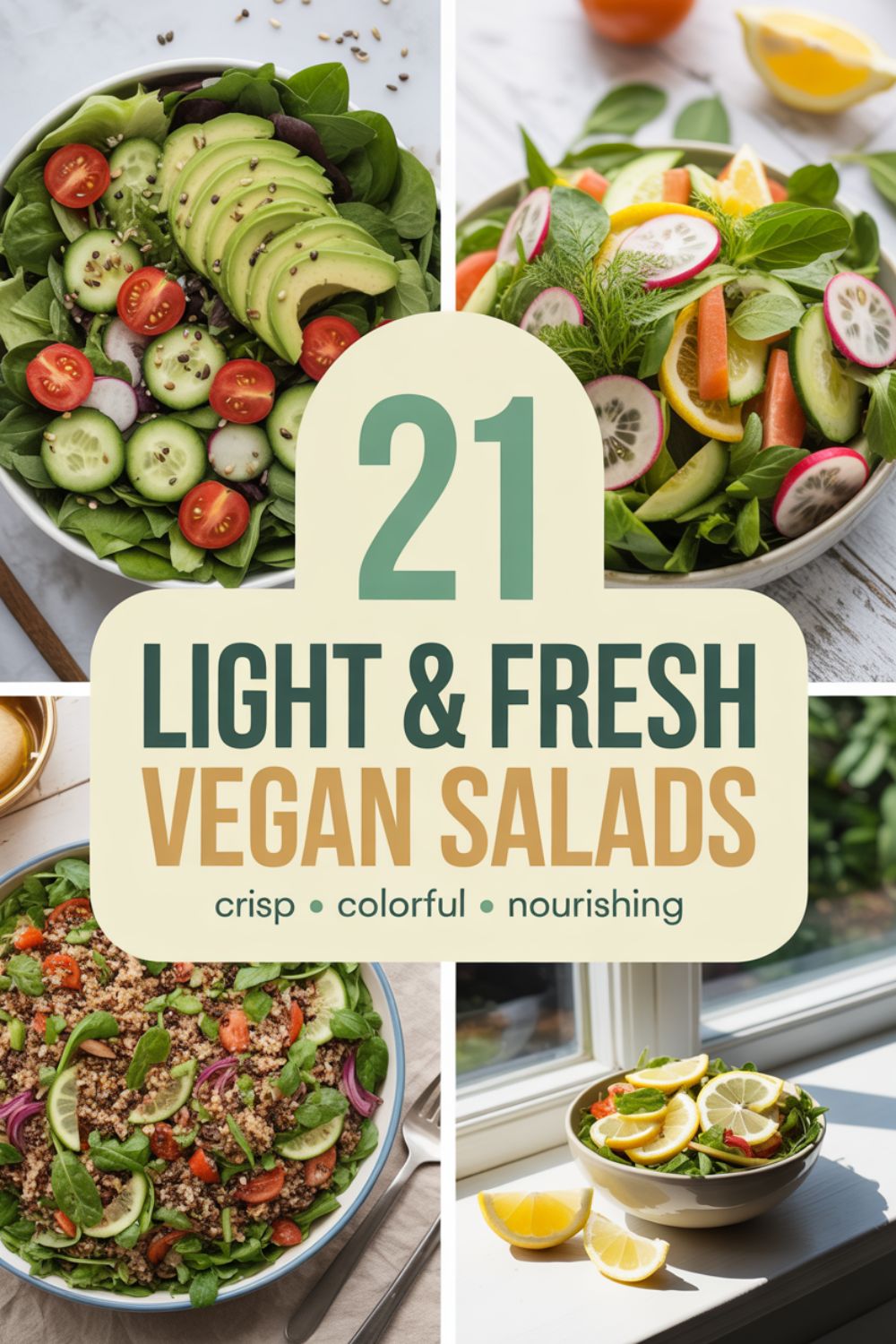
21 Light & Fresh Vegan Salads That Actually Fill You Up
Let’s talk about salads for a second. Not the sad desk lunch kind that leaves you raiding the vending machine two hours later. I’m talking about those vibrant, crunchy, actually-satisfying bowls that make you feel like you’ve got your life together.
Here’s the thing about vegan salads—they get a bad rap. People think they’re just rabbit food, but honestly? When you load them up with the right ingredients, they’re more filling than half the comfort food out there. Plus, you don’t get that post-meal food coma that makes you want to nap under your desk.
I’ve pulled together 21 salad ideas that are light enough for warm days but substantial enough to keep you going. No wilted lettuce with a single cherry tomato here. These are the real deal.
Why Vegan Salads Actually Work
Okay, so you might be wondering why salads should be your go-to meal. According to Harvard Health, leafy greens are packed with vitamins A, C, and K, plus several B vitamins and potassium. The darker the greens, the more nutrients you’re getting.
But here’s what really sold me—salads are one of those rare meals where you can pile your plate high and not feel guilty. They’re low in calories but high in fiber, which means they fill you up without weighing you down. Plus, when you add things like nuts, seeds, and chickpeas, you’re getting protein and healthy fats that keep you satisfied for hours.
I used to think salads were boring until I started treating them like a canvas. Now they’re honestly one of my favorite things to make. There’s something weirdly therapeutic about chopping vegetables and tossing everything together with a killer dressing.
Pro Tip: Make your dressings in a mason jar and shake them up instead of whisking. Less cleanup, more fun, and you can store leftovers right in the jar.
The Building Blocks of a Great Vegan Salad
Every solid salad needs a few key components. You can’t just throw lettuce in a bowl and call it a day—trust me, I’ve tried. Here’s what actually works.
Start With Your Greens
Your base matters more than you think. Romaine has a nice crunch and holds up well to heavier toppings. Arugula brings that peppery bite that makes everything taste more sophisticated. Spinach is mild and packs a serious nutritional punch. I usually mix two or three types because variety is the spice of life, right?
Baby kale is another favorite of mine—it’s tender enough to eat raw but sturdy enough that it doesn’t turn into mush if you dress it ahead of time. Unlike its tougher mature counterpart, baby kale doesn’t need a massage in oil to be edible, which honestly saves time.
Add Some Protein
This is where vegan salads really shine. Chickpeas are my ride-or-die—roast them with some spices and they’re basically crunchy little flavor bombs. Lentils are great if you want something heartier. Tofu works if you marinate it properly (dry, tasteless tofu cubes are a crime against salads). Tempeh has that nutty flavor that I actually crave sometimes.
If you’re looking for more protein-packed options, check out these high-protein vegan meals for inspiration on incorporating more plant-based protein into your diet.
Edamame is underrated—it adds texture and protein without overpowering other flavors. Hemp seeds and pumpkin seeds work too, though they’re more of a supporting act than the main protein source.
Quick Win: Roast a big batch of chickpeas on Sunday with your favorite spices. They’ll stay crispy for days in an airtight container and you can toss them on literally anything.
Get Creative With Vegetables
This is where you can really go wild. Raw vegetables add crunch—think bell peppers, cucumbers, radishes, and shredded carrots. Roasted vegetables bring depth—sweet potatoes, beets, brussels sprouts, and cauliflower all work beautifully.
I like mixing textures. Crispy raw vegetables with tender roasted ones create this contrast that makes each bite interesting. Cherry tomatoes are non-negotiable for me—they burst in your mouth and add moisture without making everything soggy.
Don’t sleep on shredded purple cabbage either. It’s crunchy, it’s pretty, and it doesn’t wilt as fast as lettuce. Plus, the color makes your bowl look like you actually know what you’re doing in the kitchen.
Speaking of creative salads, you might also enjoy these fresh and filling vegan salad recipes that take vegetables to the next level.
Don’t Forget the Extras
This is the fun part. Nuts and seeds add crunch and healthy fats—walnuts, almonds, sunflower seeds, whatever you’ve got. I keep a glass jar of mixed nuts and seeds on my counter specifically for salad toppings.
Dried fruit can work if you’re into sweet-savory combos. Cranberries, raisins, or chopped dates all pair well with bitter greens. Fresh herbs like cilantro, basil, or mint take things to another level—they’re not just garnish, they’re actual flavor.
Avocado is basically a requirement at this point. Creamy, filling, and it makes everything taste better. I use a avocado slicer tool because I’m lazy and it prevents me from accidentally stabbing myself while trying to remove the pit.
Meal Prep Essentials Used in These Salads
- Glass Meal Prep Containers with Divided Compartments – Keep your greens separate from wet ingredients until you’re ready to eat. Game changer for work lunches.
- Salad Spinner with Pull Cord – Wet lettuce makes dressing slide right off. This thing gets your greens completely dry in seconds.
- Stackable Salad Dressing Containers – Tiny leak-proof containers for dressing on-the-go. No more soggy salads.
- 25 Easy Vegan Meal Prep Ideas for Busy Weeks – Digital guide with prep strategies that actually save time.
- The Ultimate Vegan Grocery List – Free printable so you stop forgetting half the ingredients at the store.
- 30-Day Vegan Challenge – Free download with meal ideas and shopping lists if you’re just getting started.
Dressing Makes or Breaks Your Salad
I cannot stress this enough—your dressing is everything. You can have the most beautiful salad in the world, but if you dump bottled ranch all over it, what’s the point?
Making your own dressing is ridiculously easy. Most of them are just oil, acid (like lemon juice or vinegar), and whatever flavorings you want. I keep things simple with a basic lemon-tahini dressing that goes with everything. Tahini, lemon juice, water to thin it out, garlic, salt, pepper. Done.
Balsamic vinaigrette is another staple—balsamic vinegar, olive oil, Dijon mustard, maple syrup, salt, pepper. Shake it up in a squeeze bottle and you’re golden.
For creamy dressings without dairy, cashews are your friend. Soak them for a few hours, blend with lemon juice, nutritional yeast, garlic, and water until smooth. It’s like ranch but better and you actually know what’s in it.
If you’re meal prepping salads for the week, these quick vegan lunches you can pack for work include some genius dressing storage hacks.
“I started making these salads after getting bored with my usual meals, and honestly, they’ve changed my lunch game completely. I meal prep three different salads every Sunday and I actually look forward to eating them. Lost 12 pounds in two months without even trying.” – Emma from our community
21 Light & Fresh Vegan Salad Ideas
Alright, let’s get into the actual salads. I’m not going to give you full recipes for each one because this isn’t that kind of article, but I’ll give you enough detail that you can wing it in your kitchen.
Mediterranean Chickpea Salad
This one’s a crowd-pleaser. Romaine lettuce, chickpeas, cucumbers, cherry tomatoes, red onion, and Kalamata olives. Toss it with lemon-oregano dressing and top with some vegan feta crumbles. It tastes like vacation in a bowl.
The trick is to let the chickpeas marinate in the dressing for at least 15 minutes before you add them to the salad. They soak up all that lemony goodness and become the star of the show. Get Full Recipe.
Asian-Inspired Sesame Ginger Bowl
Shredded Napa cabbage, edamame, shredded carrots, sliced bell peppers, and cucumber ribbons (use a vegetable peeler for this—so much easier than julienning). The dressing is sesame oil, rice vinegar, fresh ginger, soy sauce, and a touch of maple syrup. Top with sesame seeds and crushed peanuts.
This salad stays crunchy for days, which makes it perfect for meal prep. The cabbage doesn’t wilt like lettuce does, so you can dress it ahead of time without turning it into soup.
Quinoa Power Salad
Cooked quinoa (cooled), baby spinach, roasted sweet potato cubes, dried cranberries, toasted pecans, and thinly sliced red onion. Dress it with apple cider vinaigrette. This one’s hearty enough to be a full meal.
Pro tip—roast your sweet potatoes with a little cinnamon. It sounds weird but trust me, it works. The sweet-savory thing happening here is *chef’s kiss*. Get Full Recipe.
For more bowl-style meals like this, check out these easy vegan dinner recipes that work for lunch too.
Southwest Black Bean Fiesta
Romaine and arugula mix, black beans, corn (fresh or roasted), diced avocado, cherry tomatoes, and red bell pepper. The dressing is lime juice, olive oil, cumin, and a pinch of cayenne. Top with crushed tortilla chips for crunch.
This is the salad I make when I want something that feels like I’m eating nachos but I’m actually being healthy. The lime-cumin combo is addictive. I’ve made this for non-vegan friends and they literally couldn’t tell it wasn’t loaded with cheese and sour cream.
Thai Peanut Crunch
Red cabbage, romaine, bell peppers, shredded carrots, and baked tofu. The star is the peanut dressing—peanut butter, soy sauce, lime juice, garlic, ginger, and a splash of maple syrup. Thin it out with water until it’s pourable. Top with chopped peanuts and cilantro.
I use a mini food processor to make the dressing because it emulsifies everything perfectly. No chunks, just smooth, creamy deliciousness that coats every piece of vegetable.
Pro Tip: Press your tofu before baking it. Wrap it in paper towels, stick a cast iron skillet on top, and let it sit for 15 minutes. You’ll get way crispier results.
Strawberry Spinach Salad
Baby spinach, fresh strawberries, candied pecans (make your own with maple syrup and a hot pan), red onion, and avocado. Dress it with balsamic reduction. This is my fancy salad—the one I make when I’m trying to impress someone.
The sweet strawberries against the tangy balsamic and creamy avocado is just… yeah. It’s good. Really good. And it looks Instagram-worthy without trying too hard.
Kale Caesar (Hold the Anchovies)
Chopped kale (massage it with a little olive oil first), chickpea croutons (toss chickpeas with olive oil and garlic powder, then roast until crispy), cherry tomatoes, and a creamy cashew Caesar dressing. Blend soaked cashews with lemon juice, Dijon mustard, garlic, capers, nutritional yeast, and water.
I was skeptical about vegan Caesar dressing until I tried this. The capers give it that briny punch that regular Caesar has, and the nutritional yeast adds umami. It’s honestly better than the dairy version. Get Full Recipe.
Looking for more creative ways to use kale? These vegan breakfast ideas include some killer kale smoothies too.
Roasted Beet and Arugula
Arugula, roasted beets (use golden and red for color), toasted walnuts, orange segments, and a sprinkle of vegan goat cheese. Dress with orange-balsamic vinaigrette.
Beets can be messy, so I roast them wrapped in foil. Once they’re cool, the skins slip right off. If you’re using canned beets to save time, I won’t judge you. We’re all busy here.
Lentil and Roasted Vegetable Bowl
Mixed greens, cooked green lentils, roasted zucchini, roasted red peppers, cherry tomatoes, and red onion. Dress with lemon-herb vinaigrette. This one’s meal-prep gold because everything holds up well in the fridge.
Lentils are criminally underrated. They’re cheap, they’re packed with protein and fiber, and they take on whatever flavors you throw at them. I keep pre-cooked lentil pouches in my pantry for when I’m too lazy to cook them from scratch.
Watermelon Feta Summer Salad
Arugula, cubed watermelon, vegan feta, fresh mint, thinly sliced red onion, and a drizzle of balsamic glaze. This is peak summer eating right here.
The sweet watermelon against the salty feta and peppery arugula is one of those combinations that shouldn’t work but absolutely does. It’s refreshing without being heavy, and it’s fancy enough for dinner parties.
Apple Walnut Autumn Salad
Mixed greens, sliced apples, toasted walnuts, dried cranberries, and thinly sliced red onion. Dress with apple cider vinaigrette. This salad screams fall in the best way possible.
I use Honeycrisp apples when they’re in season because they stay crispy even after you dress the salad. Granny Smith works if you like more tartness. Just toss the apple slices in a little lemon juice so they don’t brown.
For more seasonal eating inspiration, these cozy vegan fall dinners complement this salad perfectly.
Protein-Packed Buddha Bowl
Baby kale and spinach, quinoa, roasted chickpeas, roasted sweet potato, avocado, shredded carrots, and tahini dressing. This is basically a complete meal disguised as a salad.
Buddha bowls are just salads that got organized. Everything gets its own section in the bowl instead of being tossed together, which I appreciate because I’m weirdly particular about keeping flavors separate until I’m ready to mix them myself. Get Full Recipe.
Cucumber Dill Greek Salad
Romaine, cucumbers, cherry tomatoes, red onion, Kalamata olives, and vegan feta. The dressing is lemon juice, olive oil, fresh dill, garlic, and oregano.
Fresh dill is a must here—dried dill tastes like sadness in comparison. I grow dill on my windowsill in a little pot because it’s literally the easiest herb to keep alive and it makes this salad taste like you know what you’re doing.
Mango Black Bean Tropical Bowl
Mixed greens, black beans, diced mango, red bell pepper, red onion, and cilantro. Dress with lime-cumin vinaigrette. This salad is like a beach vacation for your taste buds.
Make sure your mango is ripe but not mushy. You want it sweet and firm enough to dice cleanly. If you’ve never cut a mango before, YouTube has your back—or just get a mango slicer and skip the stress.
Roasted Cauliflower and Chickpea
Arugula, roasted cauliflower, crispy chickpeas, cherry tomatoes, red onion, and a tahini-lemon dressing. Roast the cauliflower with cumin and smoked paprika for extra flavor.
I’m not usually a cauliflower person, but roasting it completely changes the game. It gets caramelized and nutty instead of that weird sulfur smell it has when you boil it. Trust the process.
Avocado Corn Lime Salad
Romaine, corn (grilled or raw), diced avocado, cherry tomatoes, black beans, and red onion. Dress with lime-cilantro vinaigrette. Simple, fresh, and ridiculously satisfying.
If you have a grill, char the corn on there first. If not, a hot cast iron pan works. The char adds a smoky depth that makes this salad taste way more complicated than it actually is. Get Full Recipe.
Pear and Walnut Salad
Mixed greens, sliced pears, toasted walnuts, dried cranberries, and a maple-Dijon vinaigrette. The combination of sweet pears and tangy mustard dressing is chef’s kiss.
Use Bosc or Anjou pears—they hold their shape better than other varieties. If your pears are super ripe and threatening to turn into mush, save them for smoothies and use firmer ones for this salad.
Edamame Crunch Salad
Shredded cabbage, edamame, shredded carrots, sliced almonds, and crispy wonton strips (check the ingredients—most are accidentally vegan). Toss with ginger-soy dressing.
This is the salad I crave when I want something that’s all crunch and no mush. The wonton strips stay surprisingly crispy even after being dressed, though I usually add them right before eating just to be safe.
Tomato Basil Caprese
Arugula, heirloom tomatoes, vegan mozzarella, fresh basil, and a balsamic reduction. It’s the classic Caprese deconstructed into salad form.
This only works when tomatoes are in season. Off-season tomatoes taste like water and disappointment. Wait for summer, get the good stuff from the farmers market, and make this when tomatoes actually taste like tomatoes.
Curry Chickpea Salad
Mixed greens, curried chickpeas, diced apple, raisins, sliced almonds, and a curry-tahini dressing. The curry spices give this salad warmth without making it heavy.
I make a big batch of curried chickpeas and keep them in the fridge for easy additions to salads throughout the week. Just toss chickpeas with curry powder, turmeric, garlic powder, and a little olive oil, then roast until crispy.
Green Goddess Salad
Butter lettuce, cucumbers, avocado, snap peas, fresh herbs (basil, parsley, cilantro), and a green goddess dressing made from blended herbs, tahini, lemon juice, and garlic.
This salad is so green it looks like it’s trying to win an award for being healthy. The dressing is where the magic happens—blend fresh herbs with tahini and lemon until it’s smooth and creamy. It’s like eating summer in bowl form. Get Full Recipe.
Pomegranate Jeweled Salad
Mixed greens, pomegranate seeds, roasted butternut squash, pecans, and a maple-balsamic dressing. This is my holiday salad—it’s festive, it’s colorful, and it makes you feel fancy.
Getting pomegranate seeds out is a pain until you learn the trick. Cut it in half, hold it cut-side down over a bowl, and whack the back with a wooden spoon. The seeds fall right out and you avoid getting juice everywhere.
If you’re planning a holiday spread, pair this with these vegan holiday desserts for a complete festive meal.
Tools & Resources That Make Salad Prep Easier
- Mandoline Slicer with Safety Guard – Perfectly thin vegetable slices every time. Makes prep work stupidly fast.
- Herb Scissors with 5 Blades – Chop fresh herbs in seconds instead of minutes. Your cilantro will thank you.
- Salad Chopper Bowl – Chop everything right in the bowl you’re serving in. Less dishes, more efficiency.
- 7 Kitchen Tools Every Vegan Home Cook Needs – Essential equipment that actually makes a difference.
- 10 Vegan Sauces and Condiments – Dressing recipes and store-bought options that don’t suck.
- 12 High-Protein Vegan Pantry Essentials – Stock your pantry with the right stuff and salads become way easier.
Make-Ahead Tips That Actually Work
IMO, the biggest barrier to eating more salads is the prep time. Nobody wants to spend 30 minutes chopping vegetables when they’re already hungry. Here’s how I get around that.
Pick one day—Sunday works for most people—and do all your vegetable prep at once. Wash and dry your greens (seriously, use a salad spinner), chop your vegetables, cook your grains and proteins. Store everything separately in glass containers in the fridge.
Keep wet ingredients separate from dry ones. Cherry tomatoes and cucumbers can hang out together. Leafy greens need their own container. Dressing always stays separate until you’re ready to eat—soggy salad is nobody’s friend.
Most prepped vegetables last 4-5 days in the fridge. Softer things like avocado and fresh herbs you’ll want to prep closer to when you’re eating them. I slice avocados in the morning before I pack my lunch, not on Sunday.
For more meal prep strategies that don’t involve eating the same thing seven days in a row, check out these easy vegan meal prep ideas.
“I thought meal prepping salads would make them taste boring and sad by day three, but the separate container method is brilliant. My Thursday salad tastes just as fresh as Monday’s. Game changer for my work lunches.” – Rachel from our community
Common Salad Mistakes to Avoid
Let’s talk about what not to do, because I’ve made every salad mistake in the book.
First mistake—using wet greens. Water dilutes your dressing and makes everything taste bland. Always dry your greens thoroughly. Second mistake—overdressing. You need way less dressing than you think. Start with a tablespoon or two, toss, and add more if needed.
Third mistake—boring greens. Iceberg lettuce has its place, but that place isn’t a main meal salad. Mix different types of greens for variety in flavor and nutrition. Fourth mistake—not enough protein. If you’re hungry an hour after eating, you didn’t add enough protein and healthy fats.
Fifth mistake—cutting vegetables too big. Everything should be bite-sized. I learned this the hard way when I tried to eat a salad with huge tomato wedges and chunks of cucumber. It was awkward and I looked like a barbarian.
According to research from the National Institutes of Health, consuming leafy greens regularly can help slow cognitive decline and is associated with being the equivalent of 11 years younger in brain age. So yeah, salads are literally brain food.
Seasonal Swaps to Keep Things Interesting
One reason people get bored with salads is they make the same ones year-round. But salads should change with the seasons, using what’s fresh and available.
In spring, load up on asparagus, peas, radishes, and fresh herbs. Summer is all about tomatoes, corn, cucumbers, and berries. Fall brings apples, pears, squash, and Brussels sprouts. Winter is citrus season—oranges, grapefruits, and pomegranates.
Shopping seasonally usually means better flavor and lower prices. Win-win. Plus, seasonal produce is at peak nutrition since it hasn’t been sitting in storage for months.
For seasonal meal planning, these light vegan summer meals and fresh vegan meals for spring offer tons of ideas.
Pro Tip: Freeze leftover fresh herbs in olive oil using an ice cube tray. Pop out a cube whenever you need it. Works great for dressings and you’ll never waste herbs again.
Dressing Storage and Shelf Life
Homemade dressings typically last 5-7 days in the fridge. Anything with fresh garlic or herbs will have a shorter shelf life than oil-and-vinegar based ones. I make dressing in small batches so it’s always fresh.
Store dressings in squeeze bottles or mason jars. Squeeze bottles make it easy to control how much you’re using. Mason jars are great because you can shake them up right before using to re-emulsify everything.
If your dressing separates, don’t panic—that’s normal. Just shake it up before using. Oil and vinegar naturally separate. If it stays separated even after shaking, add a tiny bit of Dijon mustard next time you make it—it acts as an emulsifier.
Budget-Friendly Salad Tips
Salads don’t have to be expensive. Buy whatever greens are on sale. Baby spinach is usually cheaper than fancy mixed greens and it’s just as nutritious. Frozen vegetables work for anything you’re roasting—frozen cauliflower, broccoli, and Brussels sprouts are way cheaper than fresh.
Buy nuts and seeds in bulk. That tiny container of pine nuts at the grocery store costs a fortune. The bulk section has the same thing for half the price. Dried beans and lentils are dirt cheap—cook a big batch and portion it out for the week.
Grow your own herbs if you can. A little pot of basil or cilantro on your windowsill costs less than buying fresh herbs every week, and you can snip off exactly what you need without wasting the rest of the bunch.
These store-bought vegan meals can supplement your salad game when you’re tight on time or budget.
Frequently Asked Questions
How do I keep salads from getting soggy when meal prepping?
Keep ingredients separate until you’re ready to eat. Store greens in one container, toppings in another, and dressing in a small jar. Layer wet ingredients like tomatoes on the bottom if you’re using a jar-style salad. The key is keeping moisture away from your greens until the last possible moment.
Are vegan salads actually filling enough for a meal?
Absolutely, as long as you include protein and healthy fats. A salad with just lettuce and vegetables won’t cut it. Add chickpeas, lentils, tofu, nuts, seeds, and avocado for staying power. Most of these salads have 15-20 grams of protein, which is more than enough to keep you satisfied.
What’s the best way to clean leafy greens?
Fill a large bowl with cold water and submerge your greens. Swish them around to loosen any dirt, then lift them out and let the dirt settle at the bottom. Repeat if needed. Dry thoroughly in a salad spinner—wet greens will dilute your dressing and wilt faster in storage.
Can I freeze salad ingredients?
You can freeze cooked grains, beans, and roasted vegetables, but don’t freeze raw greens, cucumbers, or tomatoes—they turn to mush. Dressings with fresh herbs and garlic can be frozen in ice cube trays for single servings. Nuts and seeds freeze well too and actually stay fresher longer in the freezer.
How long do homemade salad dressings last?
Most homemade dressings keep for 5-7 days in the fridge. Oil-and-vinegar based dressings last longer than creamy ones. If your dressing contains fresh garlic or herbs, use it within 3-4 days. Always smell it before using—if it smells off or looks separated in a weird way, toss it and make fresh.
Final Thoughts
Look, salads don’t have to be boring. They don’t have to be rabbit food. And they definitely don’t have to leave you hungry an hour later.
The secret is treating them like the actual meals they are instead of sad side dishes. Load them up with protein, healthy fats, tons of vegetables, and dressings that actually taste good. Mix textures and flavors so every bite is interesting.
Start with one or two of these salads and see how you feel. Meal prep them on Sunday so you’re not scrambling during the week. Experiment with different dressings until you find your favorites. And for the love of all things green, dry your lettuce properly.
Once you get the hang of it, making salads becomes second nature. You’ll start throwing together combinations without even thinking about it. And yeah, you might actually start craving them, which feels weird at first but then you just roll with it.
Whether you’re looking for quick work lunches, light dinners, or meal prep ideas that actually work, these 21 salads have you covered. They’re fresh, they’re filling, and they prove that eating healthy doesn’t mean suffering through tasteless food.