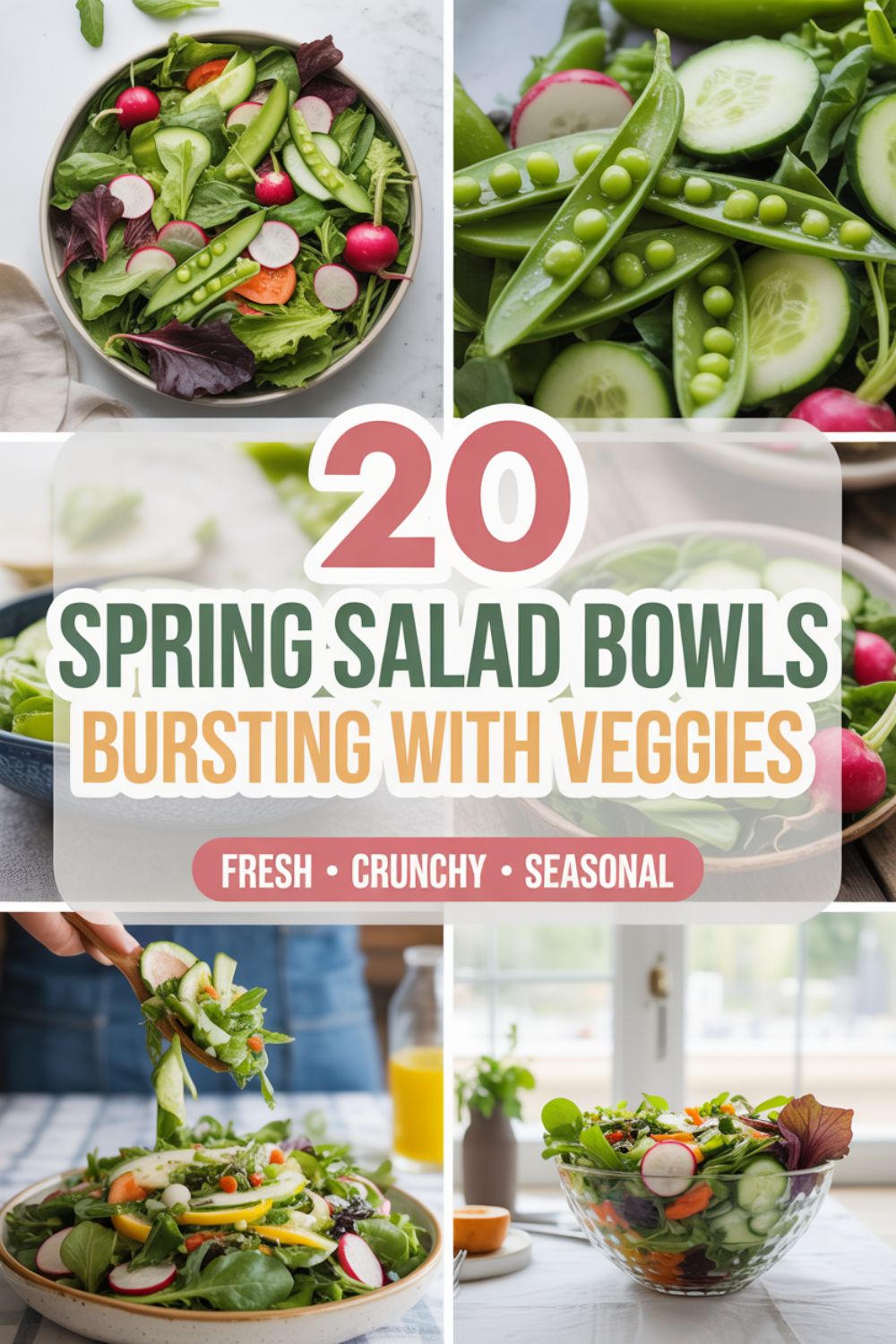
20 Fresh Spring Salad Bowls Bursting with Veggies
Listen, I get it. You’re probably sick of wilted greens drowning in ranch dressing from last Tuesday’s meal prep attempt. But spring changes everything. The farmers market is practically exploding with crisp asparagus, peppery arugula, and radishes so fresh they still have dirt on them. And honestly? This is the moment to fall back in love with salad bowls.
These aren’t your sad desk lunches. We’re talking about vibrant, nutrient-packed bowls that actually keep you full and make you feel like you’ve got your life together. Plus, when you load up on spring vegetables, you’re getting peak nutritional value since these veggies are harvested at their freshest. Think more vitamins A and C, antioxidants, and fiber that’ll keep your digestive system happy.
Why Spring Salads Hit Different
There’s actual science behind why spring veggies taste better. When produce is in season, it’s picked at peak ripeness and doesn’t travel thousands of miles to reach your plate. That means more flavor, more nutrients, and honestly, more reasons to actually eat your vegetables.
Spring vegetables like asparagus and peas are loaded with folate and potassium. Leafy greens bring iron and magnesium to the party. And those colorful radishes? They’re working overtime with vitamin C and antioxidants. According to Mayo Clinic’s research on dietary fiber, loading your bowls with fiber-rich vegetables supports digestive health and can help manage cholesterol levels.
The best part? You don’t need to be a nutrition expert to build a killer salad bowl. Just grab what looks good at the market, throw in some protein, add a decent dressing, and you’re set.
The Spring Salad Formula That Actually Works
Before we dive into the 20 bowls, let’s talk about the formula. Every great spring salad needs these components, and once you nail this down, you can literally wing it with whatever’s in your fridge.
The Base Layer
Start with 2-3 cups of greens. Mix it up with spinach, arugula, butter lettuce, or spring mix. Don’t sleep on massaged kale either—just squeeze some lemon on it and work it with your hands for 30 seconds. Game changer.
The Veggie Variety
This is where spring really shines. Aim for at least 3-4 different vegetables for color, texture, and nutrient diversity. Think snap peas, shaved asparagus, thinly sliced radishes, cherry tomatoes, and roasted beets. The more colors, the better—each color typically represents different antioxidants and vitamins.
The Protein Punch
Keep it plant-based with chickpeas, white beans, or lentils. These add about 15 grams of protein per cup and bring that satisfying heartiness. If you’re looking for more high-protein plant-based options, these high-protein vegan meals have some solid ideas you can adapt for bowls.
The Healthy Fats
Avocado, nuts, seeds, or a drizzle of good olive oil. These help your body absorb all those fat-soluble vitamins (A, D, E, K) from your veggies. Plus they make everything taste better and keep you full longer.
The Dressing Situation
Homemade is always better, but I’m not going to pretend I make dressing from scratch every single time. When I do, it’s usually a simple lemon-tahini blend or balsamic vinaigrette that takes maybe 2 minutes. I keep a good mason jar specifically for shaking up dressings—no fancy equipment needed.
20 Spring Salad Bowls You’ll Actually Want to Eat
1. Classic Spring Greens with Lemon-Herb Vinaigrette
Sometimes simple is best. Mixed spring greens, shaved radishes, snap peas, and fresh herbs all dressed in a bright lemon vinaigrette. This is your go-to when you want something light but satisfying.
2. Asparagus and White Bean Power Bowl
Roasted asparagus (I use this sheet pan that never sticks), white beans, arugula, and toasted almonds. Drizzle with tahini dressing and you’ve got yourself a protein-packed lunch that actually keeps you full. Get Full Recipe
3. Rainbow Veggie Crunch Bowl
The name says it all. Shredded purple cabbage, julienned carrots, sliced bell peppers, cucumber ribbons, and edamame over butter lettuce. Add a ginger-sesame dressing and you’ve got that satisfying crunch in every bite.
Meal Prep Essentials Used in These Bowls
Making salad bowls regularly? These tools and ingredients make the whole process way easier:
- Glass meal prep containers with dividers – Keep your greens crisp and dressing separate until you’re ready to eat
- Salad spinner that actually works – Wet lettuce is sad lettuce. This one gets greens bone-dry in seconds
- Mandoline slicer for perfect veggie ribbons – Makes those Instagram-worthy thin slices without the knife skills
- Spring Meal Prep Ebook – 30 plant-based spring recipes with weekly shopping lists
- Salad Dressing Formula Guide – Never buy store-bought again with these 15 base recipes
- Seasonal Produce Calendar – Know exactly what’s in season month by month
- Join our WhatsApp Meal Prep Community – Get weekly salad bowl ideas and swap tips with other plant-based eaters
4. Mediterranean Spring Feast
Chickpeas, cherry tomatoes, cucumber, red onion, kalamata olives, and fresh parsley over romaine. The dressing here is crucial—lemon juice, olive oil, oregano, and a touch of Dijon. This one’s basically a deconstructed Greek salad and it’s ridiculously good.
5. Roasted Beet and Arugula Elegance
Roasted beets (golden and red for maximum color), peppery arugula, candied walnuts, and a blood orange vinaigrette. This is your fancy dinner party salad that’s secretly super easy to pull off.
6. Asian-Inspired Edamame Bowl
Shelled edamame, shredded cabbage, carrots, snow peas, and crispy rice noodles with a miso-ginger dressing. The texture contrast here is what makes it special. Sometimes I add some pickled ginger for extra zing.
7. Spring Pea and Mint Refresh
Fresh or blanched snap peas, green peas, butter lettuce, fresh mint, and crumbled dairy-free feta. The mint makes this incredibly refreshing, and peas are surprisingly filling thanks to their fiber and protein content.
8. Strawberry Spinach Spring Fling
Baby spinach, sliced strawberries, toasted pecans, and a balsamic reduction that you can make in your small saucepan. Sweet, savory, and packed with vitamin C from those berries. For more fruit-forward salad ideas, check out these fresh and filling vegan salads.
9. Tex-Mex Fiesta Bowl
Black beans, corn, bell peppers, cherry tomatoes, avocado, and cilantro over romaine with a creamy cilantro-lime dressing. Add some tortilla strips if you’re feeling it. This basically tastes like a burrito but with way more vegetables.
10. Artichoke and Chickpea Mediterranean
Marinated artichoke hearts, roasted chickpeas, sun-dried tomatoes, fresh basil, and mixed greens. The key is getting crispy chickpeas—spread them on a parchment-lined baking sheet and roast at 400°F until crunchy. Get Full Recipe
Speaking of breakfast ideas that keep you full, you might also enjoy these vegan breakfast bowls that follow a similar formula—lots of fresh ingredients, good protein sources, and flavors that actually excite you.
11. Carrot Ribbon and Tahini Dream
Use a vegetable peeler to make long carrot ribbons, then toss with arugula, roasted chickpeas, pumpkin seeds, and a creamy tahini dressing. Carrots are criminally underrated in salads, but when you ribbon them like this, they’re actually the star.
12. Brussels Sprout Slaw
Shredded raw Brussels sprouts (easier than you think if you have a food processor), dried cranberries, sunflower seeds, and a maple-mustard vinaigrette. This one gets better as it sits, making it perfect for meal prep.
13. Radish and Herb Garden Bowl
Thinly sliced radishes (use a mandoline for paper-thin perfection), cucumber, fresh dill, parsley, mint, and butter lettuce with a lemon-yogurt dressing. This is so fresh and crunchy it’s almost ridiculous.
14. Roasted Cauliflower Power Bowl
Roasted cauliflower with turmeric and cumin, mixed greens, cherry tomatoes, red onion, and tahini drizzle. The spiced cauliflower gives this bowl a warm, comforting vibe even though it’s technically a cold salad.
15. Spring Mix with Candied Nuts
Sometimes you just want the classics. Spring mix, whatever vegetables you have on hand, homemade candied walnuts (so easy—just toss them in maple syrup and toast), and a simple balsamic dressing. Don’t overthink it.
16. Fennel and Orange Brightness
Shaved fennel, orange segments, arugula, pistachios, and a citrus vinaigrette. Fennel has this subtle licorice flavor that pairs perfectly with oranges. Plus, it’s loaded with fiber and vitamin C.
17. Warm Lentil and Greens Bowl
Cooked lentils (still slightly warm), spinach, roasted red peppers, red onion, and a red wine vinaigrette. The warm lentils wilt the greens just slightly, creating this perfect texture contrast. Get Full Recipe
Tools & Resources That Make Cooking Easier
These are the things that actually make a difference in how much you enjoy making salads:
- High-speed blender for creamy dressings – Turns nuts and seeds into silky smooth dressings in 30 seconds
- Set of nesting mixing bowls – Because you need different sizes for different salad assembly situations
- Quality chef’s knife – Makes vegetable prep actually enjoyable instead of a chore
- Plant-Based Nutrition Masterclass – Learn how to balance your bowls for optimal nutrition and satisfaction
- Dressing Jar Collection Template – Label and organize your homemade dressings like a pro
- Veggie Prep Shortcuts Guide – Time-saving hacks for washing, chopping, and storing produce
- Join our Recipe Testing Group on WhatsApp – Be the first to try new bowl combinations and give feedback
18. Kale Caesar with Crispy Chickpeas
Massaged kale, crispy roasted chickpeas, cherry tomatoes, and a cashew Caesar dressing that’s so good you’ll forget it’s dairy-free. The chickpeas give you that crunchy element that traditional Caesar croutons provide.
19. Spring Quinoa and Veggie Bowl
Cooked quinoa, roasted asparagus, cherry tomatoes, cucumber, fresh herbs, and lemon-tahini dressing. This is technically a grain bowl but the vegetable-to-grain ratio leans heavy on the veggies, so it counts. For more complete meal ideas like this, these easy vegan dinners follow a similar balanced approach.
20. Everything Spring Bowl
This is the “clean out your fridge” bowl. Whatever spring vegetables you have left—asparagus, peas, radishes, greens, herbs—all tossed together with your favorite beans and a dressing you love. Sometimes the best meals are the ones you don’t overthink.
The Dressing Dilemma Solved
Real talk: dressing can make or break your salad bowl. You can have the most beautiful vegetables on earth, but if your dressing is boring or you’re drowning everything in bottled ranch, it’s not going to work.
Here’s the thing about homemade dressing—it’s embarrassingly easy and tastes infinitely better than store-bought. The basic formula is 3 parts oil to 1 part acid (lemon juice, vinegar, whatever), plus salt, pepper, and whatever flavorings you want. Whisk it up in a small jar and you’re done. Two minutes, tops.
My Go-To Spring Dressings
Lemon-Tahini: Equal parts tahini and lemon juice, water to thin, garlic, salt. Blend until smooth. This is the workhorse dressing that goes on almost everything.
Balsamic-Dijon: Balsamic vinegar, Dijon mustard, olive oil, maple syrup, salt, pepper. Shake it up. Classic for a reason.
Ginger-Miso: White miso paste, rice vinegar, grated ginger, sesame oil, water. This brings that umami depth that makes vegetables taste like more than just rabbit food.
Cilantro-Lime: Fresh cilantro, lime juice, garlic, olive oil, salt, jalapeño if you like heat. Blend it smooth. Perfect for any Mexican-inspired bowl.
The beauty of making your own dressing is you control the sugar, salt, and weird additives. Plus, according to research on fiber and digestive health, pairing your vegetables with healthy fats helps your body absorb those fat-soluble vitamins we talked about earlier.
Making Spring Salads Actually Stick
Listen, I’ve been there. You get all excited about healthy eating, prep a bunch of salads, and by Wednesday you’re ordering takeout because you’re bored. Here’s how to avoid that trap.
Variety is Everything
Don’t make the same salad five days in a row. Your taste buds will revolt. Instead, prep your ingredients separately and mix and match throughout the week. Monday might be Mediterranean, Tuesday is Asian-inspired, Wednesday you throw in some roasted beets. Same ingredients, different combinations, way less boring.
Texture Matters More Than You Think
This is where most people mess up. A bowl of just soft lettuce and soft beans is depressing. You need crunch. Add nuts, seeds, crispy chickpeas, raw vegetables, or even some toasted breadcrumbs if that’s your thing. The textural contrast makes every bite interesting.
Don’t Skimp on Flavor
Salads don’t have to be virtuous and bland. Use fresh herbs generously. Add pickled onions. Throw in some nutritional yeast for a cheesy flavor. Season your vegetables before roasting them. The goal is to make food you actually want to eat, not food you choke down because it’s “healthy.”
If you’re looking for even more plant-based variety, these vegan meal prep ideas include some great bowls and other options that follow the same fresh, seasonal approach.
The Meal Prep Strategy
IMO, the secret to actually eating salads all week is a solid prep strategy. I’m not talking about making all your meals on Sunday and eating sad, wilted vegetables by Friday. I’m talking about smart component prep.
Wash and dry your greens immediately. Store them in containers with paper towels to absorb excess moisture. They’ll stay crisp for days.
Chop harder vegetables in advance. Carrots, radishes, bell peppers, cucumbers—these all hold up well pre-chopped. Store them separately in airtight containers.
Roast vegetables once, use them all week. Asparagus, beets, Brussels sprouts, cauliflower—roast them Sunday and add them cold to your salads throughout the week.
Cook your proteins in batches. Whether it’s chickpeas, lentils, or beans, cook a big batch and portion them out. They’ll keep for 4-5 days easy.
Make 2-3 dressings at once. Store them in small mason jars in the fridge. Most vinaigrettes last at least a week, creamy ones maybe 3-4 days.
The Assembly Line Approach
When it’s time to actually eat, assembly takes maybe 3 minutes. Grab your greens, add whatever pre-chopped veggies you want, throw in your protein, add some toppings, drizzle your dressing, and you’re done. It’s faster than waiting in line at Chipotle, and you know exactly what’s in it.
Seasonal Eating Beyond Spring
Here’s something worth mentioning: this whole spring salad thing isn’t just a one-season wonder. The concept works year-round, you just swap out the vegetables for whatever’s in season.
Spring is obviously perfect for asparagus, peas, and tender greens. Summer brings tomatoes, cucumbers, and peppers. Fall has squash, Brussels sprouts, and heartier greens. Winter gives you root vegetables, citrus, and cabbage. The formula stays the same, just the ingredients rotate.
When you eat seasonally, you’re not only getting better flavor and nutrition, you’re also usually saving money. In-season produce is abundant, so it’s cheaper. Plus, you’re supporting local agriculture and reducing your carbon footprint from food transportation. It’s one of those rare situations where the healthier choice is also the more economical and environmentally friendly one.
For ideas on how to transition these bowls into other seasons, these vegan soups and stews use a similar seasonal approach for colder months.
Common Spring Salad Mistakes (And How to Avoid Them)
Mistake #1: Using Wet Greens
I cannot stress this enough: dry your greens. Wet lettuce means your dressing slides right off and pools at the bottom of the bowl. Get yourself a decent salad spinner or just be patient with paper towels. It makes a massive difference.
Mistake #2: Overdressing
More dressing does not equal more flavor. It equals soggy, heavy salad that’s harder to eat. Start with less than you think you need—you can always add more. I usually do about 2 tablespoons of dressing per large bowl.
Mistake #3: Forgetting Salt
Vegetables need seasoning. Your beans need seasoning. Even your dressing probably needs more salt than you used. Don’t be afraid to season properly—it’s the difference between “I’m eating this because it’s healthy” and “I’m eating this because it’s delicious.”
Mistake #4: Ignoring Temperature
Everything doesn’t have to be ice cold. Sometimes adding warm roasted vegetables to cold greens creates this amazing temperature contrast that makes the salad way more interesting. Same with warm grains or beans over cold greens.
Mistake #5: Making It Too Complicated
You don’t need 15 ingredients. Sometimes the best salads are just 5-6 components done really well. Don’t stress about making it Pinterest-perfect. Make it delicious and easy to repeat.
Frequently Asked Questions
How long do spring salad bowls stay fresh in the fridge?
If you keep your components separate—especially the dressing—most spring salad ingredients will stay fresh for 4-5 days. Greens stored properly with paper towels can last up to a week. Once you dress the salad, eat it within a few hours for best texture. The key is assembling just before eating.
Can I make these salad bowls ahead for meal prep?
Absolutely, but use the component method. Prep all your ingredients separately on Sunday—wash greens, chop veggies, cook proteins, make dressings. Store everything in separate containers and assemble each day. This prevents sogginess and keeps everything tasting fresh all week.
What’s the best way to add protein to spring salads?
Beans and legumes are your best bet for plant-based protein. Chickpeas, white beans, black beans, and lentils all work beautifully and provide about 15 grams of protein per cup. You can eat them cold, warm, or roasted crispy. They’re also packed with fiber, which keeps you fuller longer.
Do I need special equipment to make these salad bowls?
Not really. A good knife, cutting board, and mixing bowl are the basics. However, a salad spinner makes a huge difference for crispy greens, and a mandoline slicer creates those beautiful thin vegetable slices effortlessly. But you can definitely make amazing salads with just basic kitchen tools.
How do I keep my salads from getting boring?
Variety is key. Rotate your vegetables, try different dressings, change up your protein sources, and experiment with toppings like nuts, seeds, dried fruit, or pickled vegetables. Don’t make the same salad every day—mix and match your prepped components in different combinations throughout the week.
Final Thoughts on Spring Salad Bowls
Look, at the end of the day, these spring salad bowls are just one way to eat more vegetables and feel good about your meals. They’re not magic. They won’t transform your entire life. But they might make lunch something you actually look forward to instead of an afterthought.
The best salad bowl is the one you’ll actually eat. If that means skipping the fancy ingredients and sticking with basics, do it. If it means using store-bought dressing because you hate making your own, that’s fine too. The goal is sustainable healthy eating, not Instagram perfection.
Spring vegetables are here for such a short time. You might as well enjoy them while they’re at their peak—sweet, crisp, and packed with nutrients. Load up at the farmers market, try a few of these bowl combinations, and figure out what works for you. Your body will thank you, your taste buds will be happy, and you’ll have lunches figured out for at least a few weeks.
Now go make yourself a ridiculous salad bowl and enjoy it.