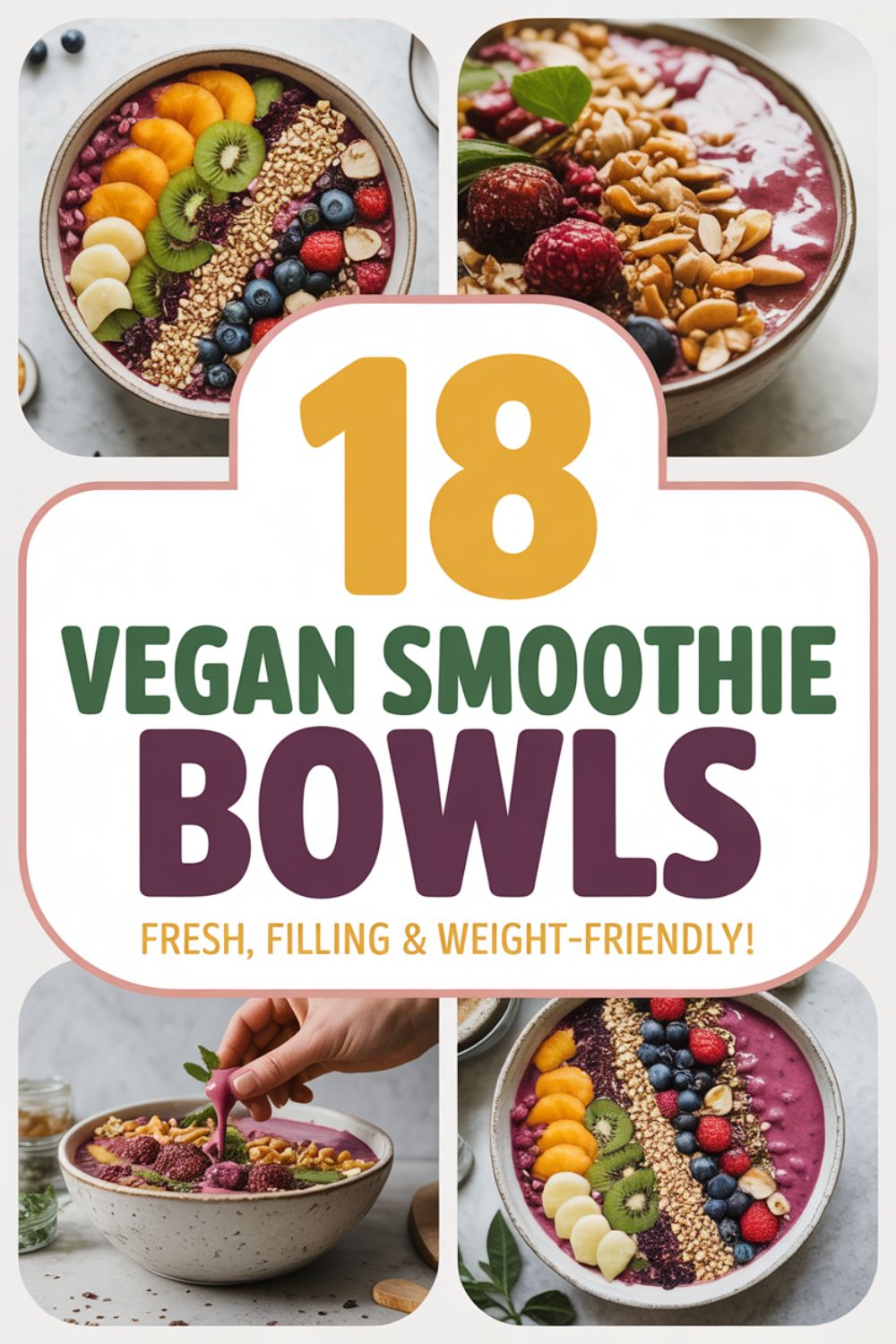
18 Vegan Smoothie Bowls for Weight Management
Look, I’m not going to sugarcoat this—losing weight while eating plants can feel like everyone’s telling you to live off sad salads and plain hummus. But here’s the thing about smoothie bowls that nobody really talks about: when you nail the formula, they’re basically the cheat code for satisfying hunger without derailing your goals.
I’ve spent the last two years tweaking recipes, messing up more batches than I’d like to admit, and figuring out what actually works. Not the Instagram-perfect bowls that leave you starving an hour later, but the kind that keep you full, energized, and actually excited about breakfast. These 18 vegan smoothie bowls aren’t just colorful—they’re strategically built to support weight management while tasting good enough that you’ll forget you’re eating “healthy.”
Why Smoothie Bowls Actually Work for Weight Management
Let me be real with you—most commercial smoothie bowls are total calorie bombs dressed up in wellness marketing. I’ve seen bowls at juice bars that pack 700+ calories with all the toppings, basically the equivalent of eating dessert for breakfast. But when you make them at home, you control everything.
The secret sauce? Protein and fiber working together. Research shows that combining adequate protein intake with high fiber content significantly improves satiety and supports weight management. It’s not rocket science—protein keeps you full longer, fiber slows digestion, and together they prevent that mid-morning crash that sends you straight to the vending machine.
Here’s what most people miss: blending fruits actually reduces the fiber content compared to eating them whole. That’s why toppings matter so much. You’re essentially rebuilding that fiber structure with seeds, nuts, and whole fruits on top. Plus, the act of chewing triggers satiety signals faster than just drinking a smoothie.
Freeze your bananas the night before and use minimal liquid—like 1/4 cup max. This creates that thick, ice cream-like texture that actually requires a spoon. Watery smoothie bowls are a rookie mistake that’ll leave you unsatisfied.
The Foundation: Building Your Base Right
Every great smoothie bowl starts with understanding ratios. You want about 2 cups of frozen fruit (half should be banana for creaminess), a protein source, minimal liquid, and something to thicken it up. I learned this the hard way after making what basically amounted to berry soup for three weeks straight.
For the protein component, you’ve got options. Vegan protein powder is the obvious choice—I’m partial to pea protein blends because they don’t get gritty. But nut butters work too, especially almond butter or cashew butter. Just know that 2 tablespoons of almond butter adds about 8 grams of protein, while a scoop of protein powder usually gives you 20-25 grams.
The thickening agents are where things get interesting. Frozen cauliflower florets sound weird, but you literally can’t taste them and they add serious volume without calories. Avocado makes things ultra-creamy but watch your portions—it’s calorie-dense even though it’s healthy fat. Chia seeds or flax work great too, plus they gel up and add that satisfying texture.
These are the tools and ingredients I actually use every week. No fluff, just what makes smoothie bowl prep less chaotic.
- High-Speed Blender (Vitamix or Ninja)Look, you can make smoothie bowls with a regular blender, but you’ll be stopping every 30 seconds to scrape down the sides. A high-speed blender with a tamper tool is worth the investment if you’re doing this regularly.
- Glass Meal Prep Containers (4-cup capacity)Perfect for storing pre-portioned frozen fruit packs. I prep Sunday night so I can just dump and blend on weekday mornings. Game changer for busy weeks.
- Silicone Ice Cube TraysFreeze leftover coconut milk, almond milk, or even green juice in these. Pop a few cubes into your blend for thickness without watering it down.
- Vegan Smoothie Bowl Recipe eBookA comprehensive digital guide with 50+ smoothie bowl variations, macros calculated, and meal prep strategies. Available in our community resources.
- Plant-Based Protein Guide PDFComplete breakdown of vegan protein sources, serving sizes, and how to hit your daily targets without supplements. Essential reading if you’re new to this.
- Weekly Meal Planner TemplatePrintable planner specifically designed for smoothie bowl prep with shopping lists, macro tracking, and prep schedules.
Want more tips and exclusive recipes? Join our WhatsApp community for daily meal prep ideas and support!
The 18 Weight-Management Smoothie Bowls
1. Classic Berry Protein Bowl
This is my absolute go-to when I need something reliable. Frozen mixed berries, half a banana, vanilla protein powder, and just enough almond milk to blend. Top it with fresh berries, a sprinkle of hemp hearts, and some crunchy granola.
The beauty of berries is their low sugar content compared to tropical fruits, plus they’re packed with antioxidants. Studies suggest that the flavonoids in berries may help regulate glucose metabolism, which is crucial for weight management. Get Full Recipe
2. Green Machine Detox Bowl
Don’t let the color scare you—this one tastes way better than it looks. Frozen mango, spinach (you won’t taste it, I promise), half an avocado, and vanilla protein. The mango sweetness completely masks the greens while you’re sneaking in serious nutrients.
I add a tablespoon of spirulina sometimes, which sounds very “wellness influencer,” but it’s actually a complete protein source. Plus, the bright green makes for killer photos if you’re into that. Get Full Recipe
3. Chocolate Peanut Butter Power Bowl
Yes, you can eat chocolate for breakfast and still lose weight. This bowl uses frozen banana, cacao powder, a scoop of chocolate protein, and a tablespoon of peanut butter blended in. It legitimately tastes like a Reese’s cup.
The trick is using unsweetened cacao powder instead of cocoa—it’s less processed and has more antioxidants. Top with sliced banana, a drizzle of peanut butter, and some cacao nibs for crunch. This bowl proves that eating for weight loss doesn’t mean suffering. Get Full Recipe
Speaking of protein-packed breakfasts, if you’re looking for more variety beyond smoothie bowls, check out these vegan breakfast ideas or these high-protein vegan meals that’ll keep you satisfied all morning.
4. Tropical Turmeric Bowl
This one’s my summer favorite. Frozen pineapple, mango, a small chunk of frozen cauliflower, turmeric powder, and a pinch of black pepper (which helps turmeric absorption). The anti-inflammatory properties are a nice bonus.
I learned from experience: start with just 1/4 teaspoon of turmeric. Too much and it tastes like you’re eating curry for breakfast, which is… an acquired taste. Get Full Recipe
5. Pumpkin Spice Protein Bowl
Fall in a bowl, basically. Frozen banana, canned pumpkin puree (not pie filling), vanilla protein, pumpkin pie spice, and a splash of vanilla almond milk. It’s like eating pumpkin pie without the guilt.
The fiber content in pumpkin is insane—one cup has 7 grams. Combined with protein, this bowl keeps me full until lunch without fail. Top with toasted pecans and a sprinkle of cinnamon. Get Full Recipe
6. Acai Energy Bowl
The classic for a reason. Frozen acai packs, banana, strawberries, and a tiny bit of apple juice. The acai gives it that distinctive dark purple color and earthy flavor that people either love or hate—I’m in the love camp.
Research indicates that regular consumption of protein and fiber-based meals as preloads can promote greater weight loss compared to lower-protein, lower-fiber alternatives. This is exactly what we’re building with these bowls. Get Full Recipe
7. Matcha Green Tea Bowl
For the caffeine addicts (me), this replaces your morning coffee situation. Frozen banana, vanilla protein, matcha powder, and coconut milk. The matcha gives you sustained energy without the coffee jitters.
Quality matters here—cheap matcha tastes like grass clippings. Spend a few extra bucks on ceremonial grade if you want this to be enjoyable. Top with coconut flakes and fresh berries. Get Full Recipe
8. Dragon Fruit Pink Bowl
Pure Instagram bait, but also delicious. Frozen dragon fruit (pitaya), banana, strawberries, and vanilla protein. The pink color is almost unnaturally vibrant, which makes it fun for meal prep motivation.
Dragon fruit is surprisingly low in calories for how sweet it tastes—about 60 calories per 100 grams. It’s mostly water and fiber, which is perfect for our purposes. Get Full Recipe
Prep your toppings in small containers at the start of the week. Slice bananas, portion out berries, measure chia seeds. Five minutes Sunday evening saves you 20 minutes across the week.
9. Chai Spice Breakfast Bowl
This is what I make when I want something cozy. Frozen banana, vanilla protein, cashew butter, and a homemade chai spice blend (cinnamon, cardamom, ginger, cloves). It’s like a hug in a bowl.
The warming spices might actually help with metabolism—there’s some evidence that cinnamon can help regulate blood sugar levels. Either way, it tastes amazing. Get Full Recipe
10. Coffee Lover’s Bowl
Double duty: breakfast and caffeine. Frozen banana, cold brew coffee (or espresso), chocolate protein, and a splash of oat milk. Top with cacao nibs and sliced banana.
The coffee adds basically zero calories but serious flavor. I use about 1/4 cup of cold brew, which gives it that mocha vibe without needing sugary syrups. Get Full Recipe
11. Blueberry Muffin Bowl
Tastes exactly like a blueberry muffin, which seems impossible but somehow works. Frozen blueberries, banana, vanilla protein, a pinch of cinnamon, and a tablespoon of oats blended in for texture.
Blueberries are nutrition powerhouses—high in antioxidants, relatively low in sugar compared to other fruits, and studies show they may help with fat oxidation during exercise. Top with fresh blueberries and a small amount of granola for crunch. Get Full Recipe
12. Cherry Almond Bowl
This one’s underrated. Frozen cherries, banana, almond butter, vanilla protein, and a drop of almond extract. The combination is oddly addictive—like cherry pie filling but actually good for you.
Cherries have natural melatonin, so some people swear by this as a pre-bedtime snack. I just think it tastes great. Get Full Recipe
Need more grab-and-go ideas beyond breakfast? These quick vegan lunches and healthy vegan snacks pair perfectly with smoothie bowl meal prep.
13. Strawberry Shortcake Bowl
Dessert vibes with breakfast nutrition. Frozen strawberries, cashew cream (soak cashews overnight, blend with water), vanilla protein, and a touch of vanilla extract. Top with fresh strawberries and crumbled vanilla protein cookies.
The cashew cream makes this insanely rich without dairy. It’s one of those bowls that makes you forget you’re eating healthy. Get Full Recipe
14. Mango Coconut Tropical Bowl
Vacation in a bowl. Frozen mango, coconut milk (from a can, not the carton—way creamier), vanilla protein, and a squeeze of lime. The lime cuts through the sweetness perfectly.
Mango is higher in sugar than berries, which is why I pair it with protein powder and limit portions. The fiber in mango still makes it a solid choice—just be mindful of quantities. Get Full Recipe
15. Peach Cobbler Bowl
Summer peaches frozen at peak ripeness make this magical. Frozen peaches, banana, vanilla protein, cinnamon, and a tiny pinch of nutmeg. Top with sliced fresh peaches and a sprinkle of granola.
Pro tip: buy peaches when they’re in season and freeze them yourself. The off-season frozen ones never taste quite right. Get Full Recipe
16. Mint Chocolate Chip Bowl
This tastes like ice cream, full stop. Frozen banana, spinach (for the green color, you won’t taste it), chocolate protein, peppermint extract, and cacao nibs blended in. Top with more cacao nibs and fresh banana.
Be careful with peppermint extract—a little goes a long way. I use maybe 1/4 teaspoon max or it tastes like toothpaste. Get Full Recipe
17. Apple Cinnamon Bowl
Fall flavors year-round. Frozen cooked apple chunks (I bake them with cinnamon first), banana, vanilla protein, and almond milk. It’s like eating apple pie filling but with 20 grams of protein.
The pre-cooked apples are key—raw frozen apple chunks get weirdly icy. Five minutes of prep makes this bowl infinitely better. Get Full Recipe
18. Mixed Berry Superfood Bowl
The everything-but-the-kitchen-sink option. Frozen mixed berries, banana, protein powder, a tablespoon each of chia seeds, flax seeds, and hemp hearts blended in. Top with goji berries, fresh berries, and bee pollen if you’re feeling fancy.
This is my “I need all the nutrients” bowl. The combination of seeds provides omega-3s, complete protein, and serious staying power. Studies show that consuming protein and fiber together before meals can significantly improve satiety and reduce overall energy intake throughout the day. Get Full Recipe
Honestly, the right tools make the difference between “I’ll meal prep later” and actually doing it. Here’s what’s worth having.
- Tamper Tool for BlendersIf your blender didn’t come with one, get this. It’s the difference between a perfectly thick bowl and adding too much liquid just to get things moving.
- Airtight Freezer Bags (reusable)Create smoothie packs with all your ingredients except liquid. Freeze flat so they stack easily. Literally dump, blend, eat.
- Small Kitchen ScaleIMO, eyeballing portions is how you end up with 500-calorie bowls instead of 300. A cheap kitchen scale keeps you honest about serving sizes.
- 30-Day Smoothie Bowl Challenge GuideDigital program with daily recipes, shopping lists, and community support. Great for building the habit without decision fatigue.
- Macro Tracking SpreadsheetPre-loaded with common smoothie bowl ingredients and their nutritional info. Makes tracking protein and fiber intake way less annoying.
- Topping Ideas Cheat SheetPrintable reference guide with 50+ topping combinations, organized by nutritional goals and flavor profiles. Cures decision paralysis.
The Protein vs. Fiber Debate: Why You Need Both
Here’s where people usually get it wrong—they focus on either protein OR fiber, not both. I’ve seen folks dump 40 grams of protein powder into their bowl and wonder why they’re hungry two hours later. On the flip side, all-fruit bowls might look pretty, but they’re basically sugar bombs without staying power.
The research is pretty clear on this. Studies comparing high-protein versus high-fiber diets found that participants on high-fiber plans reported less hunger and fewer food preoccupations. But the real magic happens when you combine them—protein preserves lean muscle during weight loss while fiber keeps your digestion happy and extends satiety.
My general rule: aim for 20-25 grams of protein and at least 10 grams of fiber per bowl. That combo typically keeps me satisfied for 4-5 hours, which is long enough to make it to lunch without snacking.
Don’t blend your toppings—keep them whole. The act of chewing triggers satiety hormones faster than just drinking your calories. Plus, texture variety makes meals more satisfying psychologically.
Toppings That Actually Matter
Let’s talk about the elephant in the room: toppings can make or break your calorie budget. I’ve seen gorgeous Instagram bowls with what’s essentially half a jar of almond butter drizzled on top, plus granola, coconut flakes, fresh fruit, and chocolate chips. That’s easily 400+ calories just in toppings.
My approach is strategic. I pick two to three toppings max, and at least one has to be purely for nutrition (like chia seeds or hemp hearts). The other two can be for taste and texture—think fresh fruit and a small sprinkle of granola.
Smart topping choices include hemp hearts (protein and omega-3s), chia seeds (fiber and thickness), fresh berries (volume without many calories), sliced banana (natural sweetness), unsweetened coconut flakes (texture), and cacao nibs (chocolatey without sugar). Save the nut butter drizzles for occasional treats—they’re calorie-dense even though they’re healthy.
One thing I learned: toasted nuts have way more flavor than raw ones, so you can use less and still get that satisfying crunch. I keep a jar of toasted almonds and another of toasted walnuts ready to go.
Looking for more plant-based meal ideas to round out your week? These easy vegan dinners and vegan pasta dishes complement smoothie bowl breakfasts perfectly.
Meal Prep Strategy: The Sunday Ritual
Here’s my exact Sunday prep routine that makes weekday mornings actually manageable. First, I portion out frozen fruit into reusable freezer bags—each bag gets one bowl’s worth of fruit. I write the recipe name on the bag with a marker so I’m not guessing on Monday morning.
Then I prep toppings. Slice bananas and freeze them on a silicone baking mat (they won’t stick, trust me). Portion chia seeds, hemp hearts, and any nuts into small containers. Wash berries and store them in the fridge so they’re ready to go.
The game-changer is making protein powder “packs”—I measure out one scoop into small bags or containers for each day. Sounds excessive, but it eliminates one decision from my morning brain-fog routine. When you’re half-awake at 6am, fewer decisions equals more success.
For variety without decision fatigue, I usually prep three different bowl bases and rotate them. This week might be Berry Protein, Green Machine, and Chocolate Peanut Butter. Next week I switch it up. Keeps things interesting without overwhelming myself with choices.
Common Mistakes That Sabotage Results
After two years of making these religiously, I’ve made every mistake possible. Here are the big ones that’ll derail your weight management goals if you’re not careful.
Using too much liquid: This is the number one rookie error. You want a thick, spoonable consistency, not a drinkable smoothie. Start with 1/4 cup of liquid and add more ONLY if your blender absolutely refuses to blend. A proper smoothie bowl should require a spoon, period.
Skipping the protein: All-fruit bowls look pretty and taste great for about an hour. Then you’re starving and irritable. Protein is non-negotiable if you want this to actually replace a meal. Don’t skip it just because you don’t like protein powder—use nut butter, silken tofu, or Greek yogurt if you’re not strict vegan.
Going overboard on toppings: I get it, the toppings are fun. But a handful of granola is 150 calories. Two tablespoons of almond butter is another 200. Add fruit, coconut, and chocolate chips and you’ve basically added a second meal on top of your breakfast.
Not weighing ingredients: “Half a banana” means different things to different people. Get a cheap kitchen scale and use it, at least until you’re good at eyeballing portions. The difference between 100g and 150g of banana might only be 50 calories, but it adds up.
Using juice as liquid: Even fresh-pressed juice is basically sugar water without the fiber. Stick to plant milk, coconut water, or just regular water. Save the calories for actual food you can chew.
When Smoothie Bowls Aren’t the Answer
Real talk: smoothie bowls aren’t magic. They’re a tool, and like any tool, they work better for some people than others. If you’re someone who needs to chew substantial food to feel satisfied, a smoothie bowl might not cut it even with toppings.
Some people find that drinking (or spooning) their calories just doesn’t register the same way as eating solid food. That’s totally valid. There’s research showing that while fiber can reduce appetite in many people, responses vary significantly between individuals.
Also, if you’re someone who gets hangry easily or has blood sugar issues, the natural sugars in fruit—even with protein and fiber—might cause energy crashes. In that case, you might be better off with savory breakfast options like tofu scrambles or overnight oats with less fruit.
The point is: pay attention to how your body responds. If you’re hungry an hour after eating a well-constructed smoothie bowl, it’s not your fault—it might just not be the right breakfast format for you. And that’s fine.
Frequently Asked Questions
Are smoothie bowls actually good for weight loss?
Yes, but only when they’re properly constructed. The key is balancing protein and fiber while keeping calories reasonable—aim for 300-400 calories per bowl including toppings. Commercial smoothie bowls at juice bars can easily hit 700+ calories, which won’t help with weight management. Homemade bowls where you control portions and ingredients are a different story.
How much protein should I put in a smoothie bowl?
Aim for 20-25 grams of protein per bowl to maximize satiety and preserve muscle mass during weight loss. You can get this from a scoop of vegan protein powder (usually 20-25g), two tablespoons of nut butter (about 8g), or a combination. Research suggests this amount is sufficient to improve post-meal fullness and reduce hunger between meals.
Can I make smoothie bowls the night before?
Sort of, but they’re definitely better fresh. You can prep all your ingredients the night before in freezer bags, then just blend in the morning. If you must make the actual bowl ahead, store it in an airtight container in the freezer and let it thaw for 10-15 minutes before eating. The texture won’t be quite as good, but it works in a pinch.
What’s the difference between a smoothie bowl and regular smoothie?
Thickness and toppings. Smoothie bowls use way less liquid to create a thick, spoonable base that you eat with a spoon rather than drink. The toppings add fiber, protein, and different textures that make the meal more satisfying. The act of chewing toppings also triggers satiety signals faster than just drinking a smoothie.
Are frozen fruits as nutritious as fresh?
Actually, frozen fruits are often more nutritious than “fresh” ones that have been sitting around for weeks. Fruits are frozen at peak ripeness, which locks in nutrients. Plus, for smoothie bowls, frozen fruit is essential for achieving that thick, creamy texture without adding ice. I’d argue frozen is superior for this specific use case.
Final Thoughts
Look, I’m not going to pretend that smoothie bowls are some miracle weight-loss solution. They’re not. What they are is a practical, flexible breakfast option that makes it easier to hit your protein and fiber targets while actually enjoying what you eat.
The real value is in the consistency. When you have a breakfast routine that’s quick, satisfying, and genuinely tasty, you’re way more likely to stick with it. And consistency is what actually moves the needle on weight management—not perfection, not restriction, just showing up day after day with decent choices.
These 18 bowls give you enough variety to avoid boredom while keeping the framework simple enough that you’re not overwhelmed. Pick three favorites, prep them on Sunday, rotate them through the week. Once that becomes automatic, add in a new bowl or two. That’s how habits stick.
The worst thing you can do is try to make all 18 bowls in the first week and burn out. Start small, build the routine, then expand. Your future self will thank you when you’re six months in and still excited about breakfast instead of choking down another sad protein shake.