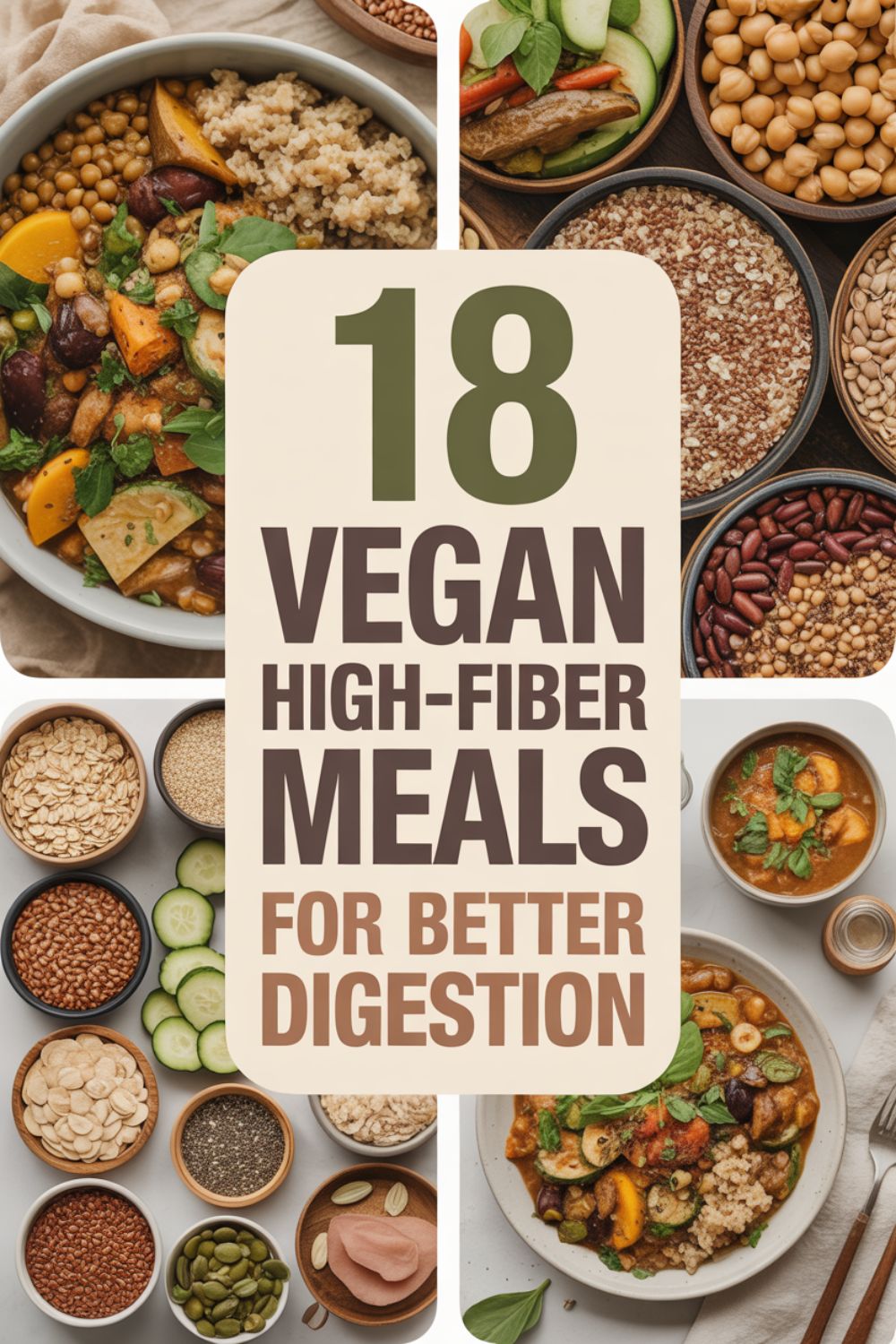
18 Vegan High-Fiber Meals for Better Digestion
Your gut’s been sending you messages lately, hasn’t it? Maybe it’s the bloating after lunch, the sluggish afternoons, or that general feeling that your digestive system is staging a quiet rebellion. Before you go blaming everything on stress or bad genes, let’s talk about something way more practical: fiber.
Look, I’m not going to pretend I woke up one day suddenly obsessed with bowel movements and gut bacteria. But after years of feeling like my stomach was a temperamental roommate who refused to cooperate, I finally figured out the connection between what I ate and how I felt. Turns out, fiber isn’t just something your grandma talks about—it’s legitimately the MVP when it comes to keeping your digestive tract happy.
The thing is, most of us aren’t getting nearly enough fiber. We’re talking a serious gap here. And if you’re vegan or plant-based curious, you’ve got a massive advantage—plant foods are basically fiber powerhouses. But you still need to know how to put together meals that actually deliver the goods without making you feel like you’re eating cardboard.
So I’ve pulled together 18 vegan meals that are packed with fiber, taste genuinely good, and won’t require you to become a professional chef or spend your entire paycheck at the bougie grocery store. These are real meals for real people who want to feel better without overthinking every single bite.
Why Fiber Actually Matters for Your Gut
Alright, quick science moment without getting too nerdy. Fiber comes in two types—soluble and insoluble—and your body needs both. Soluble fiber dissolves in water and forms this gel-like substance that slows digestion, helps lower cholesterol, and keeps blood sugar stable. Think oats, beans, and most fruits.
Insoluble fiber, on the other hand, doesn’t dissolve. It adds bulk to your stool (yeah, we’re going there) and keeps things moving through your digestive system. This is the stuff that prevents constipation and generally makes your gut function like a well-oiled machine. You’ll find it in whole grains, nuts, and most vegetables.
But here’s what really sold me on prioritizing fiber: research shows that plant-based diets promote a diverse ecosystem of beneficial gut bacteria. These little microbes ferment fiber into short-chain fatty acids, which reduce inflammation, strengthen your gut barrier, and basically act like bodyguards for your digestive health. Pretty cool for something you can’t even see, right?
The problem is that most adults only get about 15 grams of fiber daily when we should be hitting 25-38 grams depending on age and gender. That’s a pretty significant gap, and it’s exactly why so many people deal with digestive issues that could honestly be solved with some strategic meal planning.
Breakfast: Start Your Day Right
1. Overnight Oats with Chia Seeds and Berries
I’m starting with this one because it literally requires zero morning effort, and if you’re anything like me, mornings are not the time for complicated cooking. Mix rolled oats with plant milk, chia seeds, and whatever berries you’ve got, then let it sit in the fridge overnight. The chia seeds alone pack 10 grams of fiber per ounce, plus they make everything creamy without any weird additives.
The oats give you soluble fiber that keeps you full until lunch, and the berries add antioxidants plus more fiber. I throw in some ground flaxseed too—adds a nutty flavor and bumps up the omega-3s. You can make five jars on Sunday night and have breakfast sorted for the week. Get Full Recipe.
2. Sweet Potato and Black Bean Breakfast Burrito
Whoever decided breakfast had to be sweet clearly never had a good savory breakfast burrito. Roasted sweet potatoes with black beans wrapped in a whole wheat tortilla is basically comfort food that happens to be incredibly good for your gut. Sweet potatoes have both types of fiber, and black beans bring nearly 8 grams per half cup.
I usually roast a big batch of sweet potatoes at the beginning of the week using this silicone baking mat—saves cleanup time and nothing sticks. Add some salsa, avocado, and maybe a handful of spinach if you’re feeling virtuous. Wrapping it all in a whole grain tortilla adds even more fiber to the mix.
3. Green Smoothie Bowl with Hemp Hearts
Before you roll your eyes at another green smoothie recommendation, hear me out. A smoothie bowl is different because you eat it with a spoon, which makes your brain register it as an actual meal instead of just a drink. Blend spinach, frozen banana, plant milk, and a scoop of plant protein powder, then top it with granola, sliced fruit, and hemp hearts.
The key is keeping the liquid minimal so it’s thick enough to eat with a spoon. I use this compact blender which is powerful enough to pulverize frozen fruit but doesn’t take up half my counter. Hemp hearts add protein and healthy fats, while the granola brings the crunch and extra fiber. For more breakfast inspiration, check out these vegan breakfast ideas that’ll actually make mornings tolerable.
Lunch: Midday Fuel Without the Crash
4. Quinoa Buddha Bowl with Roasted Vegetables
Buddha bowls are having a moment, and honestly, they deserve it. There’s something satisfying about eating a bowl that looks like a rainbow threw up in the best possible way. Start with quinoa as your base—it’s got 5 grams of fiber per cooked cup plus it’s a complete protein.
Pile on roasted chickpeas, steamed broccoli, shredded purple cabbage, grated carrots, and whatever other vegetables you’ve got hanging around. Drizzle with tahini dressing and you’ve got a lunch that’ll keep you full and focused instead of face-planting on your keyboard at 3 PM. The variety of vegetables means you’re getting different types of fiber, which your gut bacteria absolutely love.
5. Lentil and Vegetable Soup
Lentils are criminally underrated. One cup of cooked lentils packs 15.6 grams of fiber, which is over half your daily target right there. I make a big pot on Sunday and eat it all week, which sounds boring but it’s actually one of those soups that gets better as it sits.
Brown lentils, diced tomatoes, carrots, celery, onions, garlic, vegetable broth, and whatever spices you’re feeling. I cook mine in this dutch oven which distributes heat evenly and makes me feel like a real adult who has their life together. Serve with crusty whole grain bread and you’ve got yourself a legitimately satisfying meal. Want more cozy options? These vegan soups and stews are perfect for meal prep.
6. Chickpea Salad Sandwich
If you miss tuna salad, chickpea salad is going to blow your mind. Mash chickpeas with vegan mayo, diced celery, red onion, a squeeze of lemon, and whatever seasonings you like. Spread it on whole grain bread with lettuce and tomato, and you’ve got a sandwich that actually fills you up.
Chickpeas bring 12.5 grams of fiber per cup, plus they’re incredibly cheap and shelf-stable. I keep canned chickpeas in my pantry at all times for exactly this reason. Sometimes I use this potato masher to get the right texture—not complete mush, but not whole chickpeas either.
Speaking of quick lunches, if you’re always rushing, you’ll want to see these quick vegan lunch ideas you can actually pack for work without losing your mind every morning.
Dinner: Evening Meals That Won’t Weigh You Down
7. Whole Wheat Pasta with White Beans and Kale
Pasta gets a bad rap, but whole wheat pasta is actually a solid fiber source—about 6 grams per cup. The trick is what you do with it. I sauté garlic in olive oil, throw in chopped kale until it wilts, add white beans and a splash of the pasta cooking water to make it saucy, then toss everything with the cooked pasta.
Add some red pepper flakes and nutritional yeast, and you’ve got dinner in 20 minutes that doesn’t taste like diet food. The combination of pasta, beans, and kale gets you a good mix of both fiber types, plus the meal is actually satisfying enough that you won’t be raiding the pantry an hour later.
8. Stuffed Bell Peppers with Brown Rice and Lentils
Stuffed peppers look impressive but are surprisingly easy. Cut bell peppers in half, scoop out the seeds, and fill them with a mixture of cooked brown rice, lentils, diced tomatoes, onions, and spices. Bake until the peppers are tender and everything’s heated through.
Brown rice has 3.5 grams of fiber per cup, and combined with lentils, you’re looking at a serious fiber boost. I prep the filling ahead and stuff the peppers right before baking. The peppers themselves also contribute fiber and make the whole thing feel fancy without much extra effort. For more filling dinner ideas, check out these easy vegan dinner recipes for every night of the week.
9. Black Bean and Sweet Potato Tacos
Tacos are the ultimate customizable meal, and these ones are packed with fiber without sacrificing any flavor. Roast cubed sweet potatoes with cumin and chili powder, warm up black beans with garlic and lime, and pile everything into corn tortillas with shredded cabbage, salsa, and avocado.
Corn tortillas are naturally gluten-free and have more fiber than flour tortillas. I warm them in this cast iron skillet which gets them perfectly charred and pliable. The sweet potato and black bean combination is a fiber powerhouse that’ll keep your digestive system happy for hours.
10. Veggie-Loaded Stir-Fry with Brown Rice
Stir-fries are perfect for using up whatever vegetables are getting sad in your fridge. I typically use broccoli, snap peas, bell peppers, mushrooms, and carrots, but honestly, anything works. The key is cutting everything roughly the same size so it cooks evenly.
Serve over brown rice or quinoa, and make sure your sauce has some depth—soy sauce, rice vinegar, maple syrup, garlic, ginger, and a dash of sesame oil. The vegetables bring different types of fiber, and the brown rice adds even more. Plus, the high heat from stir-frying means everything cooks fast, which is clutch on weeknights. If you love pasta too, these vegan pasta dishes are total crowd-pleasers.
Hearty Main Dishes
11. Three-Bean Chili
Chili is one of those meals where you can basically throw everything in one pot and end up with something that tastes like you actually tried. Kidney beans, black beans, pinto beans, crushed tomatoes, bell peppers, onions, garlic, and your preferred chili spices. Let it simmer until everything melds together.
The three different types of beans bring serious fiber—we’re talking 15+ grams per serving if you’re generous with the beans. Top with avocado, green onions, and maybe some vegan sour cream if you’re feeling fancy. I make huge batches and freeze portions in these glass meal prep containers so I always have backup dinner ready.
12. Moroccan Chickpea Stew
This stew is proof that healthy food doesn’t have to be boring. Chickpeas, sweet potatoes, tomatoes, onions, garlic, and a blend of Moroccan spices like cumin, cinnamon, and paprika. The sweet potatoes break down a bit as it cooks, making the whole thing creamy without any added cream.
Serve over couscous or with whole grain flatbread for scooping. The combination of chickpeas and sweet potatoes gives you both types of fiber, and the spices add depth without any extra calories. It’s the kind of meal that makes your kitchen smell amazing while it cooks.
13. Barley and Mushroom Risotto
Real talk: barley is way easier to cook than rice, and it has way more fiber. One cup of cooked barley has 6 grams of fiber, and it’s got this chewy texture that’s really satisfying. I make a risotto-style dish by slowly adding vegetable broth to barley while stirring, letting it get creamy.
Add sautéed mushrooms, onions, garlic, and finish with nutritional yeast for that umami flavor. It’s comfort food that won’t make you feel like you need a nap afterward. I use this wooden spoon for stirring—something about it just feels right when making risotto.
Meal Prep Essentials Used in This Plan
Look, I’m not trying to sell you a bunch of stuff you don’t need, but these are the things that genuinely make my life easier when I’m trying to eat well consistently:
Physical Products:
- Glass Meal Prep Containers – The ones with the snap lids that actually stay closed in your bag
- High-Speed Blender – For smoothies, soups, and sauces that actually get smooth
- Cast Iron Skillet – Lasts forever, heats evenly, makes everything taste better
Digital Resources:
- 30-Day Vegan Challenge – Free meal plan if you’re just starting out
- Ultimate Vegan Grocery List – Printable checklist so you never forget ingredients
- 21-Day Vegan Smoothie Plan – Takes the guesswork out of breakfast
Salads That Actually Fill You Up
14. Warm Lentil and Roasted Vegetable Salad
Cold salads are fine and all, but warm salads hit different, especially when it’s chilly out. Roast whatever vegetables you’ve got—I like Brussels sprouts, sweet potatoes, and red onions—then toss them with cooked lentils and a maple-mustard vinaigrette while everything’s still warm.
Serve over mixed greens or arugula. The warm vegetables wilt the greens slightly, and the whole thing feels substantial enough to be an actual meal. The lentils alone bring 8 grams of fiber per half cup, and the roasted veggies add even more. If salads are your thing, you’ll love these fresh and filling vegan salad recipes.
15. Quinoa Tabbouleh with Extra Vegetables
Traditional tabbouleh is mostly parsley with a bit of bulgur, but I flip the ratio and use quinoa instead. Lots of chopped parsley, mint, tomatoes, cucumber, red onion, and quinoa, all dressed with lemon juice and olive oil.
The quinoa makes it more filling than traditional versions, and you get complete protein along with your fiber. It keeps well in the fridge for days and actually tastes better after the flavors have time to hang out together. I use this salad spinner to dry the herbs properly—wet herbs make everything soggy.
16. Rainbow Slaw with Peanut Dressing
Shredded cabbage, carrots, red bell pepper, edamame, and whatever other crunchy vegetables you can find, all tossed in a peanut butter-lime dressing. The cabbage family is loaded with fiber and has this satisfying crunch that makes the whole salad feel fresh.
Edamame adds protein and more fiber, plus the peanut dressing makes it taste way better than your average boring slaw. I prep the vegetables ahead and keep the dressing separate until I’m ready to eat. It’s one of those meals that travels well and doesn’t get sad sitting in the fridge.
Snacks and Lighter Options
17. Roasted Chickpeas
These are dangerously addictive. Drain and dry canned chickpeas, toss with oil and spices, then roast at 400°F until crispy. They’re like healthy chips except they actually have nutritional value. One batch disappears embarrassingly fast in my house.
You can season them however you want—everything bagel seasoning, buffalo sauce, cinnamon and sugar for a sweet version. Each cup of chickpeas has over 12 grams of fiber, and they’re way more satisfying than regular chips. I make them on this rimmed baking sheet which has enough space that they get crispy instead of steaming. Need more snack ideas? Check out these healthy and satisfying vegan snacks.
18. Apple Slices with Almond Butter and Chia Seeds
Sometimes the simplest things are the best. Slice an apple, spread almond butter on it, sprinkle with chia seeds. That’s it. The apple has fiber, the almond butter has healthy fats and protein, and the chia seeds add even more fiber plus omega-3s.
It’s the kind of snack that takes two minutes but actually holds you over until your next meal. I keep individual packets of almond butter in my desk drawer for exactly this purpose. Way better than hitting the vending machine when the 3 PM slump hits.
Tools & Resources That Make Cooking Easier
These are my ride-or-die kitchen helpers that make healthy eating less of a chore:
Physical Products:
- Food Processor – Chops vegetables in seconds, makes hummus, basically does all the annoying work
- Instant Pot – Cooks dried beans in under an hour, makes soup while you sleep
- Quality Chef’s Knife – A good knife makes everything faster and safer
Digital Resources:
- High-Protein Vegan Pantry Essentials – Stock your kitchen right from the start
- Kitchen Tools Every Vegan Needs – The actual useful stuff, not the gimmicky gadgets
- Vegan Sauces and Condiments Guide – Because bland food is not the goal here
Making It Work in Real Life
Here’s the thing nobody tells you about eating more fiber: you need to ease into it. If you go from eating 10 grams a day to 35 overnight, your gut will revolt. We’re talking bloating, gas, and general discomfort that’ll make you want to give up immediately.
Start by adding one high-fiber meal per day for a week, then gradually increase. Your gut bacteria need time to adjust to the new influx of food they’re supposed to ferment. Also, drink more water. Fiber absorbs water to do its job, and if you’re dehydrated, you’re basically creating the opposite of what you want.
Another pro move: don’t stress about hitting your fiber target every single day. Some days you’ll nail it, other days you’ll eat pizza and call it a night. That’s fine. The goal is to generally trend upward with your fiber intake, not to become obsessive about hitting an exact number.
Batch cooking is your friend here. Make big portions of things like lentil soup, chili, or grain salads on the weekend, then mix and match throughout the week. You’re not eating the exact same meal every day, but you’re also not cooking from scratch seven nights a week like some kind of superhero.
And honestly? Once your digestive system starts functioning better, you’ll notice the difference. Less bloating, more regular bathroom visits, better energy levels, and just generally feeling less sluggish. It’s not dramatic or Instagram-worthy, but it’s the kind of improvement that makes daily life noticeably better.
For more comprehensive guidance, check out this collection of easy vegan meal prep ideas that’ll set you up for success without requiring a culinary degree.
Frequently Asked Questions
How much fiber should I actually be eating every day?
Women under 50 should aim for about 25 grams daily, while men in the same age range should target 38 grams. After 50, those numbers drop slightly to 21 grams for women and 30 grams for men. Most people are getting less than half of these recommendations, which is why digestive issues are so common.
Can you get too much fiber?
Yes, actually. Going overboard with fiber—especially if you increase it too quickly—can cause bloating, cramping, and gas. It can also interfere with mineral absorption if you’re eating extreme amounts. Stick to the recommended ranges and increase gradually. Your gut will thank you for the gentler approach.
Do I need to take fiber supplements on a vegan diet?
Probably not, unless your doctor specifically recommends it. Whole plant foods provide fiber along with vitamins, minerals, and other beneficial compounds that supplements can’t match. If you’re eating a variety of beans, whole grains, vegetables, and fruits, you’re likely getting plenty of fiber naturally. IMO, food is always better than pills when you have the option.
Why do beans give me gas?
Beans contain oligosaccharides, which are complex sugars that humans can’t fully digest. When these reach your large intestine, bacteria ferment them, producing gas. The solution? Rinse canned beans thoroughly, start with small portions, and gradually increase. Your gut bacteria will adapt over time, and the gas situation improves significantly for most people.
Can high-fiber meals help with weight loss?
Fiber helps you feel full longer, which naturally leads to eating fewer calories throughout the day. It also slows digestion and helps stabilize blood sugar, preventing those energy crashes that make you reach for snacks. While fiber alone won’t magically make you lose weight, it’s definitely a helpful tool when combined with overall healthy eating patterns.
Final Thoughts
Getting enough fiber isn’t rocket science, but it does require some intentional meal planning. The good news is that once you’ve got a rotation of go-to high-fiber meals, it becomes second nature. You stop thinking about it so much and just naturally gravitate toward foods that make you feel good.
These 18 meals are a solid starting point, but don’t be afraid to experiment and find what works for your taste buds and schedule. Maybe you hate lentils but love black beans. Cool, swap them out. Maybe you need everything to be meal-prep friendly because weeknight cooking isn’t happening. That’s fine too—most of these scale up easily.
The real magic happens when your digestive system starts functioning smoothly and you realize how much better you feel overall. Better energy, clearer skin, more stable moods, fewer afternoon crashes—all from giving your gut the fiber it’s been begging for.
Start with one or two of these meals this week. See how you feel. Adjust as needed. And remember that perfect is the enemy of good—eating more fiber most of the time is infinitely better than stressing about hitting exact targets every single day. Your gut knows the difference between genuine effort and obsessive tracking, and it responds better to the former.